bathroom-makeovers
Creative Ideas for Elegant Bathroom Makeovers
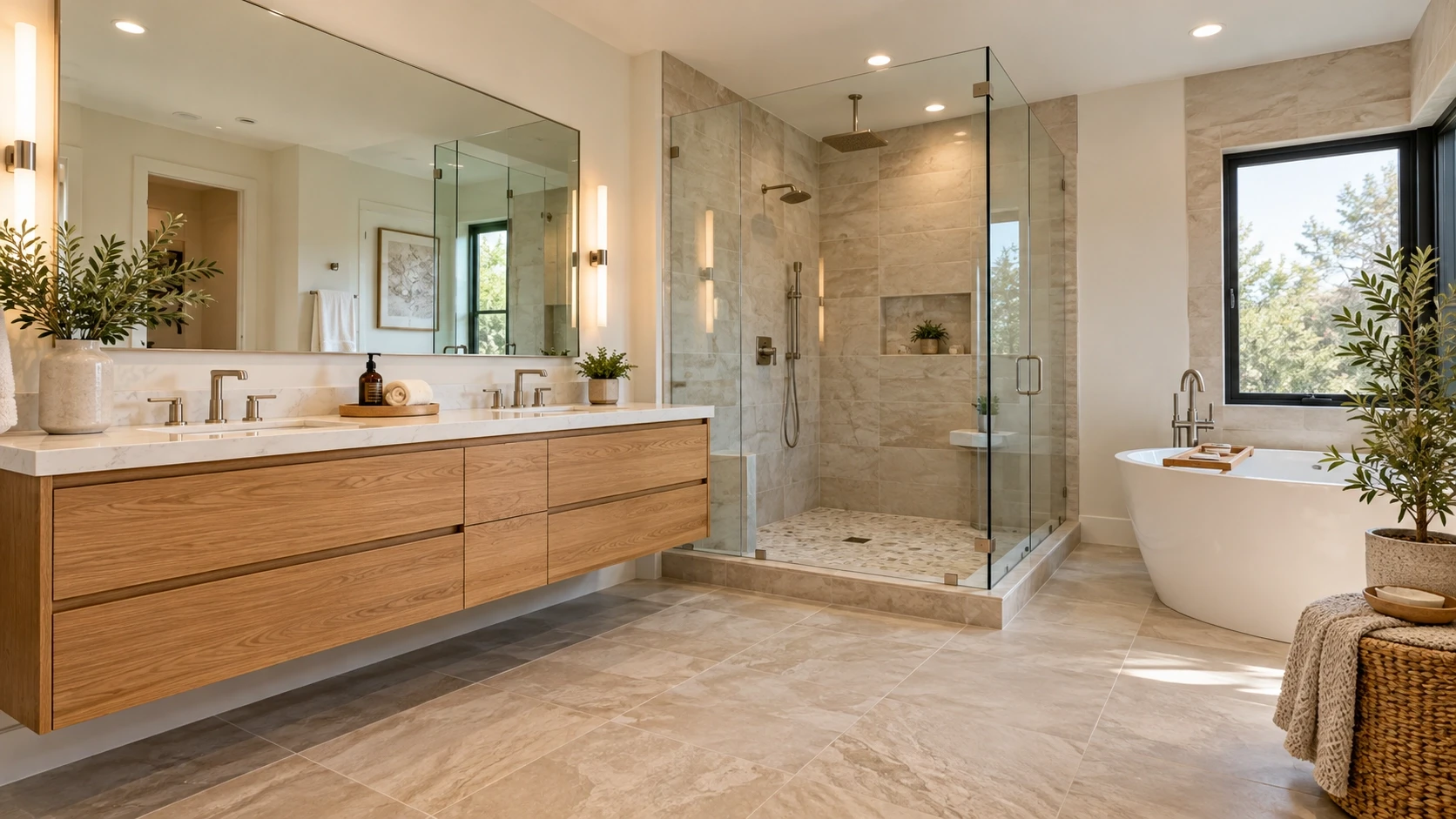
Elegant bathroom makeover ideas include stylish vanities, timeless tiles, modern fixtures, smart storage & color schemes for a refined, functional space.
Elegant bathroom makeover ideas focus on combining timeless materials, thoughtful lighting, practical storage, and coordinated finishes. You do not need a complete renovation to create a more refined space. Replacing an outdated vanity, upgrading fixtures, or refreshing the tile can make a noticeable difference. The best approach balances appearance, comfort, durability, and your available budget.
An elegant bathroom feels balanced, comfortable, and carefully designed. It does not depend on expensive materials or oversized fixtures. Instead, it uses a consistent color palette, quality finishes, suitable lighting, and a layout that makes everyday routines easier.
Three elements make a particularly strong difference:
For example, a warm white bathroom with natural wood cabinetry, understated stone-look tile, and brushed-metal fixtures can feel sophisticated without appearing overly formal. A simple design also tends to remain attractive longer than one built around a short-lived trend.
Before selecting products, consider the bathroom’s size, ventilation, plumbing locations, and existing condition. These factors influence which improvements will deliver the greatest value.
The most effective creative bathroom makeover ideas combine attractive details with practical improvements. Focus on the features that occupy the most visual space first, then introduce smaller accents to complete the design.
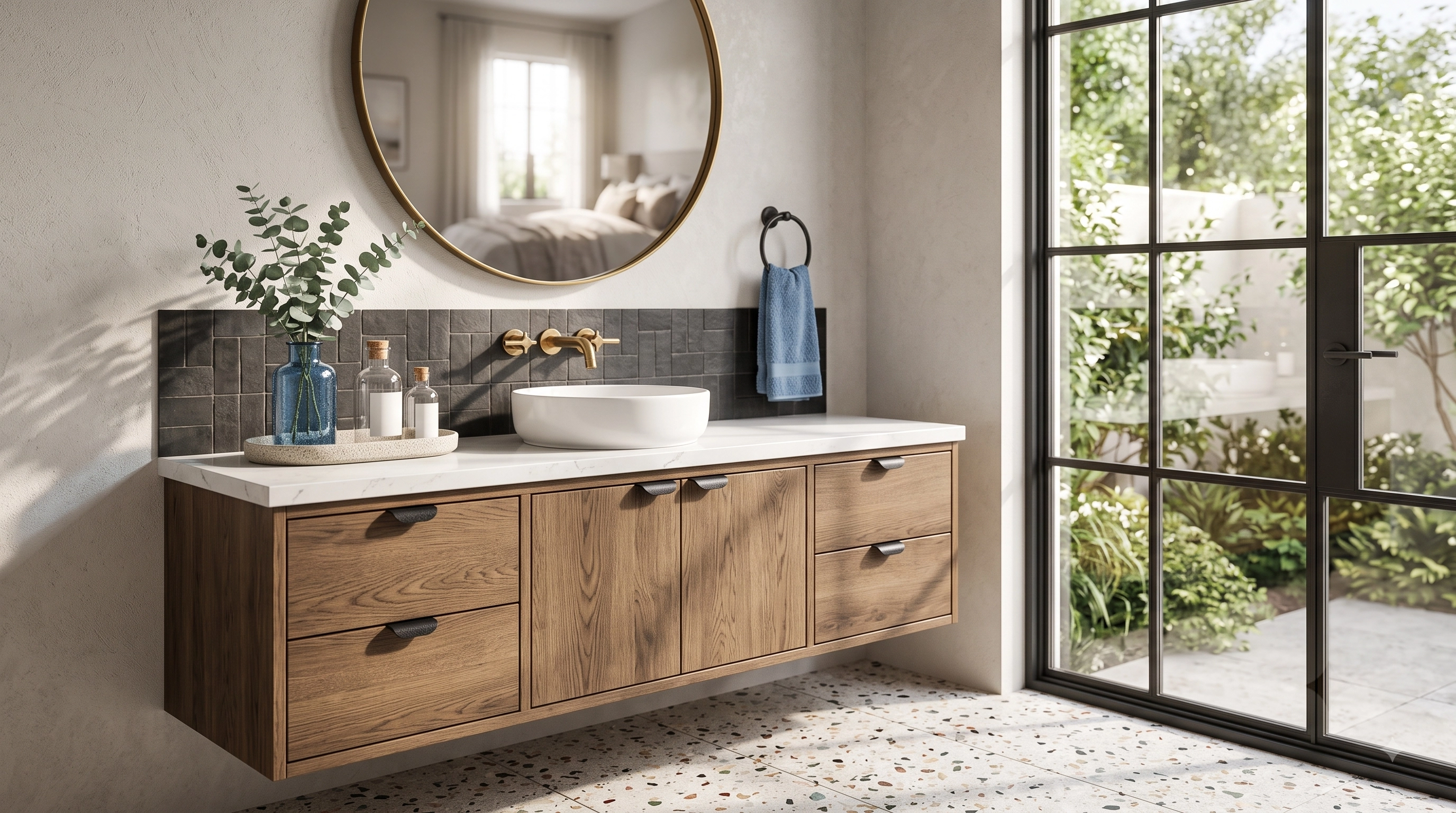
A vanity often serves as the visual anchor of a bathroom. Replacing an outdated cabinet with a clean-lined design can immediately make the room feel more contemporary.
Consider a floating vanity if the wall structure and plumbing allow it. Its open space beneath creates a lighter appearance and makes floor cleaning easier. For traditional layouts, a freestanding vanity with simple cabinet fronts offers a timeless alternative.
Choose a countertop that complements the surrounding finishes. Quartz, natural stone, and quality solid-surface materials each offer different patterns, maintenance needs, and price points.
Storage matters just as much as appearance. Deep drawers, divided organizers, and concealed compartments help keep toiletries out of sight. Before purchasing a new vanity, measure the available width and confirm that doors and drawers can open comfortably.
Tile can establish the entire mood of a bathroom. Large-format porcelain tiles create fewer visible grout lines, which can help walls and floors appear more continuous. Marble-look porcelain provides a similar visual effect to natural stone without requiring the same maintenance routine as many stone surfaces.
For a timeless look, consider:
Avoid selecting floor tile based on appearance alone. Wet-area flooring should have suitable slip resistance, and the tile must be compatible with the installation location.
For more guidance on material selection, compare the best bathroom flooring options before finalizing your design.
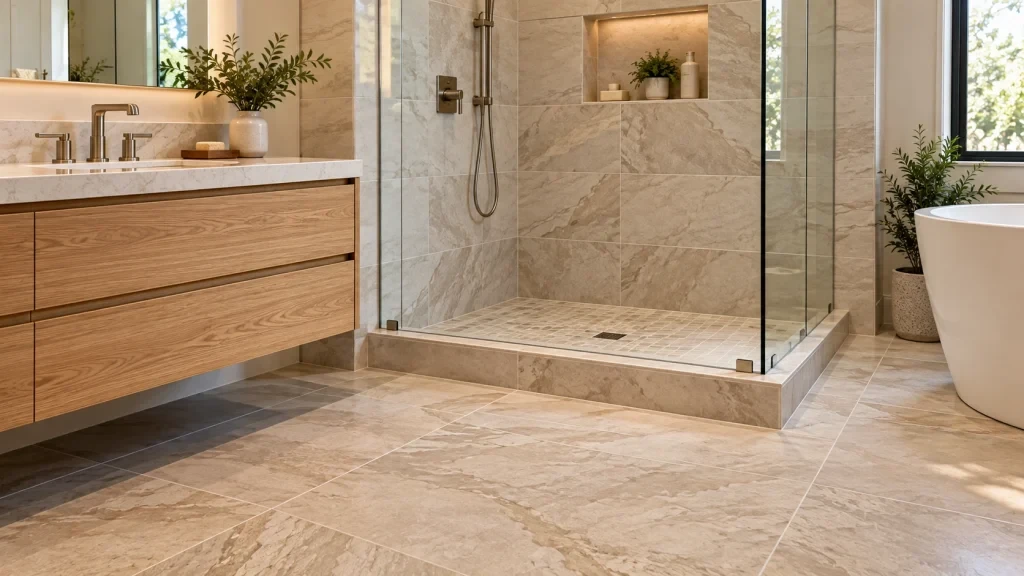
A frameless glass shower enclosure can make a bathroom feel more open by reducing the visual barriers created by bulky frames and opaque curtains. It works particularly well when the shower features attractive tile or a coordinated wall finish.
Clear glass suits most designs, while low-iron glass can reduce the green tint visible along glass edges. Hardware in brushed nickel, chrome, or matte black can complement the rest of the bathroom.
However, glass alone will not solve every space problem. The shower still needs proper drainage, waterproofing, and a suitable layout. Door swing, entry clearance, and access should also be considered before installation.
If you are deciding between different shower arrangements, explore the differences between walk-in showers and tub conversions.
A freestanding bathtub can give a spacious bathroom a distinctive, upscale appearance. Its sculptural shape creates a focal point without requiring elaborate decoration.
Choose a tub that fits the room’s proportions. A large model may look impressive in a showroom but overwhelm a smaller bathroom or restrict movement around the vanity.
Before installation, check floor support, plumbing access, faucet placement, and cleaning clearance. Freestanding tubs can also require more water than some standard models, so confirm that the water heater and plumbing can meet your needs.
If your bathroom is compact, a well-designed built-in tub or spacious shower may provide better everyday functionality.
Mirrors and lighting influence both the appearance and usability of a bathroom. A large mirror can reflect natural light and make a narrow room feel more spacious.
Consider a round mirror above a rectangular vanity for contrast, or choose a wide rectangular mirror for a clean, modern look. Backlit mirrors can add a subtle contemporary accent, provided their electrical installation is suitable for the bathroom environment.
Layered lighting usually works better than relying on one overhead fixture. Combine general lighting with vanity lighting that illuminates the face evenly. Place fixtures to minimize harsh shadows, especially around the mirror.
Select bathroom-rated electrical fixtures and follow applicable safety requirements for wet and damp locations.
A coordinated color scheme makes different bathroom features feel connected. Neutral shades remain popular because they work with many materials and can accommodate future changes in accessories.
Useful bathroom color schemes include:
Use stronger colors selectively. A painted vanity, accent wall, or decorative tile section can provide personality without overwhelming the room.
Remember that lighting affects how paint and tile colors appear. Review samples under the bathroom’s actual lighting before making a final decision.
New faucets, showerheads, cabinet pulls, and towel bars can refresh a bathroom without changing its entire layout.
Choose a finish that complements the room’s existing materials. Chrome offers a bright, versatile look, brushed nickel creates a softer appearance, and matte black adds contrast. Brushed brass can introduce warmth when paired with suitable cabinetry and tile.
Consistency is helpful, but every fixture does not need to match exactly. The overall combination should feel intentional.
Check faucet compatibility, mounting dimensions, water pressure requirements, and replacement-part availability before purchasing. A stylish fixture is less useful if it does not fit the existing plumbing or proves difficult to maintain.
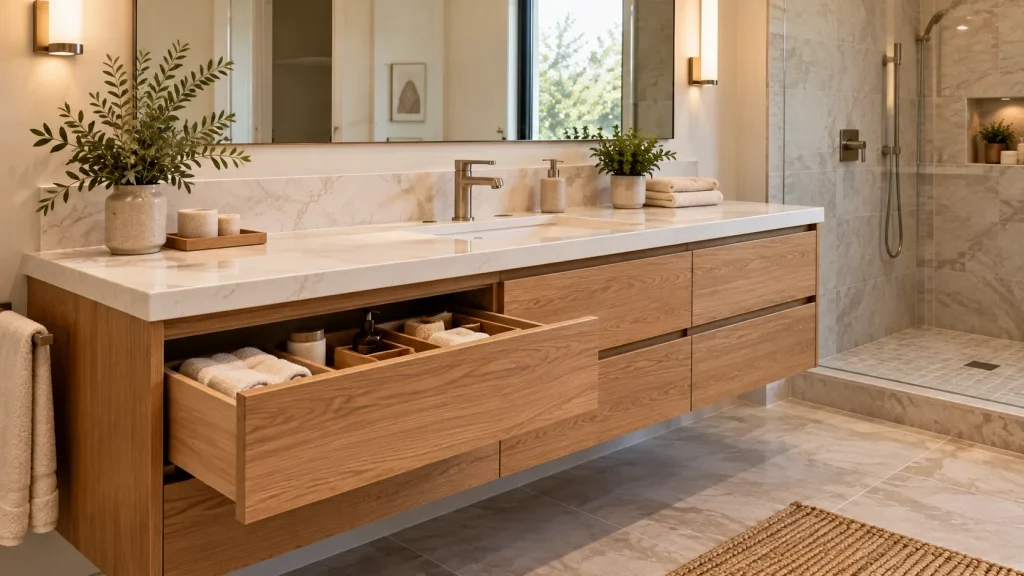
Built-in shower niches provide a dedicated place for shampoo, soap, and other bathing essentials. They reduce countertop-style clutter inside the shower and can create a clean, integrated finish.
For the best result, plan niche dimensions around the products you use. Position the niche away from direct spray when practical, and ensure its waterproofing integrates correctly with the surrounding shower system.
Outside the shower, recessed medicine cabinets, mirrored storage, and narrow shelving can make use of otherwise wasted space. These solutions are especially useful in bathrooms with limited floor area.
Avoid adding shelves simply to fill empty walls. A few useful storage features generally look better than multiple decorative objects that collect dust or moisture.
A small bathroom can look elegant when every feature serves a purpose. Light colors, large mirrors, compact fixtures, and visually simple finishes help reduce the feeling of crowding.
Wall-mounted vanities and recessed medicine cabinets can free up useful space. Sliding or appropriately configured shower doors may improve access where a swinging door would interfere with movement.
Use consistent flooring and wall finishes where practical to create visual continuity. Avoid excessive patterns, oversized accessories, and storage units that restrict the walking area.
A primary bathroom offers more room to combine comfort with statement features. Depending on the available space, you might introduce a double vanity, a large walk-in shower, a freestanding tub, or heated flooring.
The strongest luxury bathroom design ideas prioritize everyday comfort rather than adding expensive features indiscriminately. For example, separate vanity storage can reduce morning congestion, while a well-planned shower can improve accessibility and simplify cleaning.
Choose one or two standout features and let the remaining finishes support them. Natural stone, coordinated lighting, quality cabinetry, and restrained hardware often create a more cohesive result than combining several competing focal points.
Guest bathrooms benefit from simple, low-maintenance design choices. A fresh vanity, attractive mirror, coordinated fixtures, and clean tile can make the room feel welcoming without requiring extensive structural work.
Provide practical storage for hand towels and toiletries. Choose durable finishes that are easy to clean, and ensure lighting works well for everyday grooming.
If the bathroom receives limited natural light, use a light color palette and balanced artificial lighting. A small decorative accent, such as a framed print or a simple plant suitable for the environment, can finish the space without creating clutter.
Selecting the right materials is essential for a bathroom that looks attractive and performs well over time. Moisture, temperature changes, cleaning products, and daily use can affect how finishes age.
Start by comparing durability, maintenance, installation requirements, and cost. Porcelain tile is often a practical choice for floors and shower walls because it is available in many styles and generally requires little maintenance. Natural stone offers distinctive patterns but may need periodic sealing and more careful cleaning.
For other surfaces, consider these guidelines:
Do not overlook the work behind the visible finishes. Proper waterproofing, plumbing connections, and ventilation protect the investment and help prevent moisture-related damage.
It is also worth deciding where to spend more and where to save. Invest in dependable waterproofing, installation quality, and frequently used fixtures. Decorative accessories and easily replaced accents can remain simple.
An elegant bathroom makeover starts with a clear design direction and practical priorities. Coordinated colors, attractive tile, a functional vanity, thoughtful lighting, and modern fixtures can transform the room without requiring every feature to be replaced.
The most successful bathroom renovation ideas balance appearance with durability and comfort. Choose materials that suit your maintenance preferences, make storage part of the original design, and address waterproofing before focusing on decorative details.
If your plans involve changing the shower layout, replacing plumbing, or completing a full renovation, professional guidance can help you evaluate the available options. Home Renew 360 serves homeowners across Southern California, including Long Beach and surrounding counties. You can contact the team to discuss your bathroom remodeling goals and determine a suitable next step.
Start with a coordinated color palette, attractive lighting, a modern vanity, and quality fixtures. Replace visibly outdated hardware and consider updating worn tile or mirrors. Keep countertops uncluttered and choose materials that complement one another.
Use light colors, a large mirror, streamlined fixtures, and efficient storage. A floating vanity can create a more open visual effect, while clear shower glass helps maintain sightlines across the room. Limit decorative patterns and choose a few high-quality finishes rather than overcrowding the space with accessories.
Warm white, beige, soft gray, and muted earth tones provide versatile foundations. Pair them with porcelain tile, natural wood accents, quartz countertops, or carefully maintained natural stone. Chrome and brushed nickel are adaptable fixture finishes.
Bathroom makeover costs depend on the room’s size, material choices, labor rates, and the extent of the renovation. Cosmetic updates, such as painting and replacing hardware, generally cost less than replacing a vanity, installing new tile, or rebuilding a shower.