Getting an ADU permit in Los Angeles involves checking property eligibility, preparing construction plans, submitting an application, and obtaining approval before construction begins. Requirements depend on your property, ADU type, and applicable local and state regulations.
Understanding the process early can help you avoid incomplete applications, unnecessary revisions, and delays.
What Is an ADU Permit and When Do You Need One in Los Angeles?
An ADU permit is official approval to build or convert a space into an accessory dwelling unit while meeting applicable building and safety requirements.
ADUs include detached backyard units, additions attached to existing homes, and conversions of eligible garages or interior spaces.
In Los Angeles, permits are generally required for new ADU construction and garage conversions. Depending on the project, separate approvals may also be needed for electrical, plumbing, mechanical, or other work.
Before designing your unit, review the California ADU building requirements to understand applicable construction standards and permitting rules.
Steps to Get an ADU Permit in Los Angeles
Follow these steps to prepare your application and navigate the approval process.
Step 1: Understand Los Angeles ADU Permit Requirements
Start by identifying the type of ADU you want to build and the requirements that apply.
Common options include:
- Detached ADU: A separate structure on the same property as the main home.
- Attached ADU: A unit connected to the existing house.
- Garage conversion ADU: An existing garage converted into living space.
- Interior conversion ADU: An eligible portion of the home converted into a separate dwelling.
Each option has different design and construction needs. Review current Los Angeles Department of Building and Safety (LADBS) guidance to determine the appropriate application process.
Step 2: Check Zoning, Property Eligibility, and Site Restrictions
Before preparing detailed plans, confirm that your property can accommodate the proposed ADU.
Check these factors:
- Property eligibility: Confirm which ADU rules apply to your lot.
- Setbacks and height: Review applicable placement and building-height requirements.
- Available space: Consider existing structures, property boundaries, and access.
- Utilities: Evaluate water, sewer, and electrical connections.
- Safety: Identify any fire-access or drainage requirements.
Requirements vary by project, and some ADUs qualify for specific exemptions under California law.
If you’re comparing designs, understanding the differences between attached and detached ADUs in California can help you choose a suitable option.
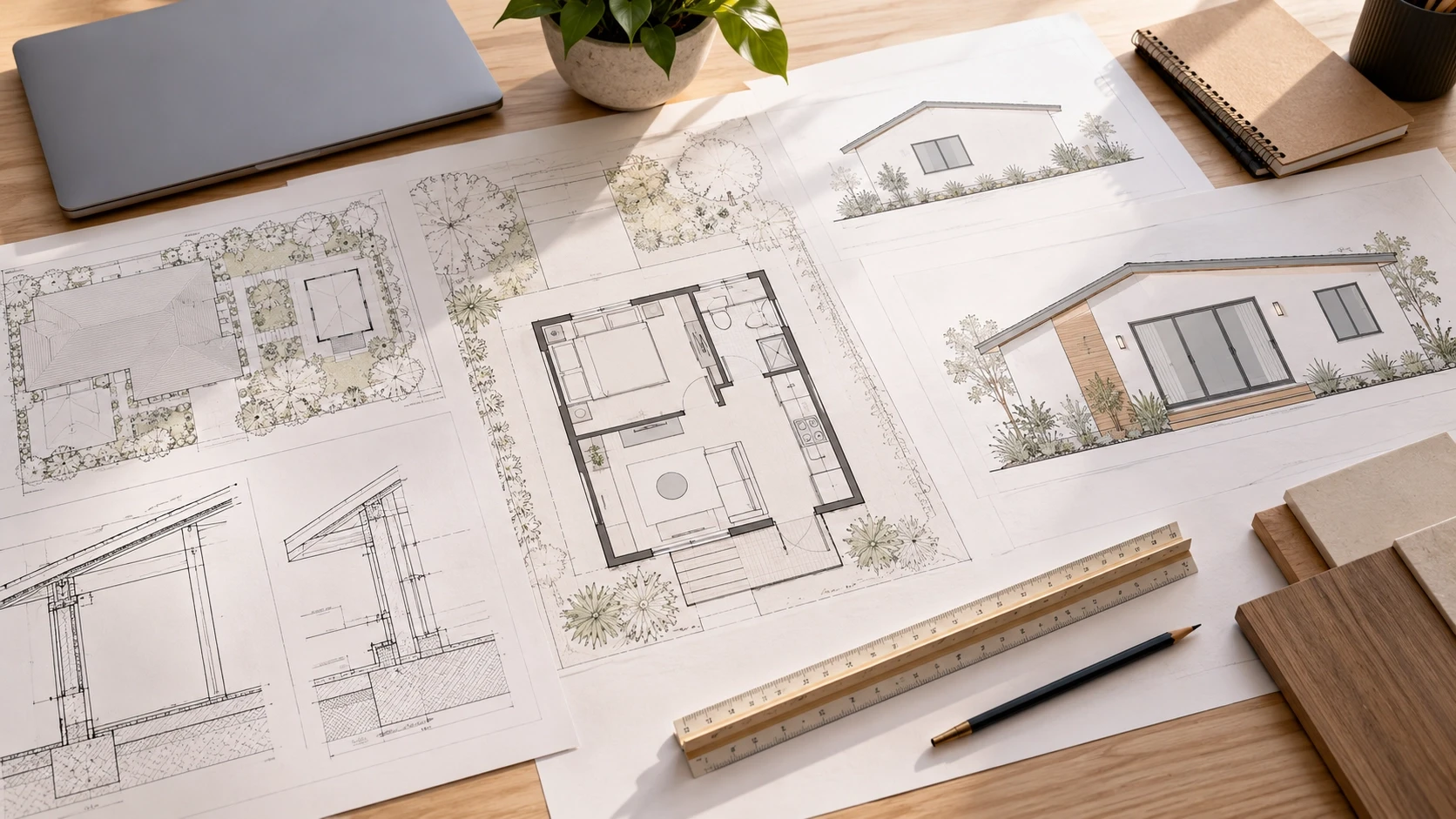
Step 3: Prepare Your ADU Plans and Required Documents
Prepare the drawings and supporting documents required for permit review. Depending on the project, these may include:
- Site plans showing existing structures and the proposed ADU.
- Floor plans, elevations, and construction drawings.
- Structural and foundation details.
- Electrical, plumbing, and mechanical plans, when required.
- Energy compliance documentation.
- Utility and drainage information.
Ensure the plans are accurate and consistent. Missing details or conflicting dimensions can lead to corrections and additional review time.
For garage conversions, the existing foundation, walls, roof, insulation, and utilities may also need evaluation.
Step 4: Submit Your ADU Permit Application in Los Angeles
Submit your application through the appropriate permitting authority.
For properties within the City of Los Angeles, LADBS handles key building permit and plan review functions. Properties in other cities or unincorporated areas may follow different procedures.
Before submitting, confirm that your application includes the required forms, plans, supporting documents, and fees.
Keep copies of your submission and application reference numbers so you can track progress and respond to requests efficiently.
Submitting an application does not authorize construction. Obtain the required permits before starting work.
Step 5: Navigate Plan Review and Permit Corrections
During plan review, the relevant authorities check whether your proposed ADU meets applicable building codes and other requirements.
Common reasons for corrections include:
- Missing construction details or documents.
- Inconsistent architectural and structural plans.
- Fire-safety or access concerns.
- Incomplete energy compliance information.
- Unclear utility or drainage plans.
If reviewers request changes, address each comment carefully and coordinate revisions with your designer or qualified professionals.
Complete responses can help reduce repeated review cycles, although approval timing depends on project complexity and agency workload.
Step 6: Obtain Approval and Begin ADU Construction
Once required reviews are complete and outstanding issues are resolved, the responsible authority can issue the necessary permits.
Before construction, verify that the permits have been issued and review any conditions attached to them.
Inspections may be required during construction for foundations, framing, plumbing, electrical systems, insulation, and other work, depending on the project.
Schedule inspections at the appropriate stages and obtain final approval when construction is complete. The authority will determine whether additional occupancy documentation is required.
How Long Does It Take to Get an ADU Permit in Los Angeles?
The time needed to obtain an ADU permit varies with project complexity, application quality, site conditions, and review requirements.
California law establishes timelines for certain ADU application decisions, but these do not guarantee a specific end-to-end project schedule.
Common factors affecting the timeline include:
- Project design: New detached units may require different reviews from garage conversions.
- Application completeness: Missing documents can cause delays.
- Site conditions: Utility connections or structural issues may require additional work.
- Plan corrections: Design revisions can lead to further review.
Prepare your documents carefully, confirm submission requirements, and respond promptly to correction notices.
If you’re considering a garage conversion, review the garage conversion costs in Los Angeles when planning your overall project budget.
Conclusion
Getting an ADU permit in Los Angeles requires property checks, accurate plans, application submission, and the necessary approvals. Starting with zoning and eligibility requirements can help you avoid preventable delays.
Because requirements vary by property and ADU type, confirm the applicable rules before beginning construction.
Home Renew 360 offers ADU and garage conversion services. If you’re planning a project, contact the team to discuss your plans and next steps.