stucco-maintenance
Stucco Maintenance: How Often Should You Paint a Stucco House in Southern California?

Stucco Maintenance usually means repainting every 5–10 years. Learn the signs, paint options & preparation steps for a Southern California stucco home.
A stucco house in Southern California typically needs repainting about every 5 to 10 years, but the right timing depends on the stucco’s condition, paint quality, sun exposure, and local weather. Regular stucco maintenance helps protect the exterior and keeps the home looking fresh.
Southern California’s strong sunlight, dry conditions, coastal moisture, and occasional rain can all affect exterior paint. Knowing what signs to watch for and how to prepare stucco before painting can help homeowners avoid unnecessary repairs and keep their exterior in good condition.
There is no single schedule that works for every stucco home. Some homes may need painting sooner, while well-maintained surfaces may go longer before repainting is necessary.
The main factors include:
Instead of repainting simply because a certain number of years has passed, inspect the stucco regularly. This approach can help you identify problems before they become more difficult to address.
The condition of the exterior usually provides better guidance than the calendar alone. If you notice several visible changes, it may be time to evaluate the stucco and paint.
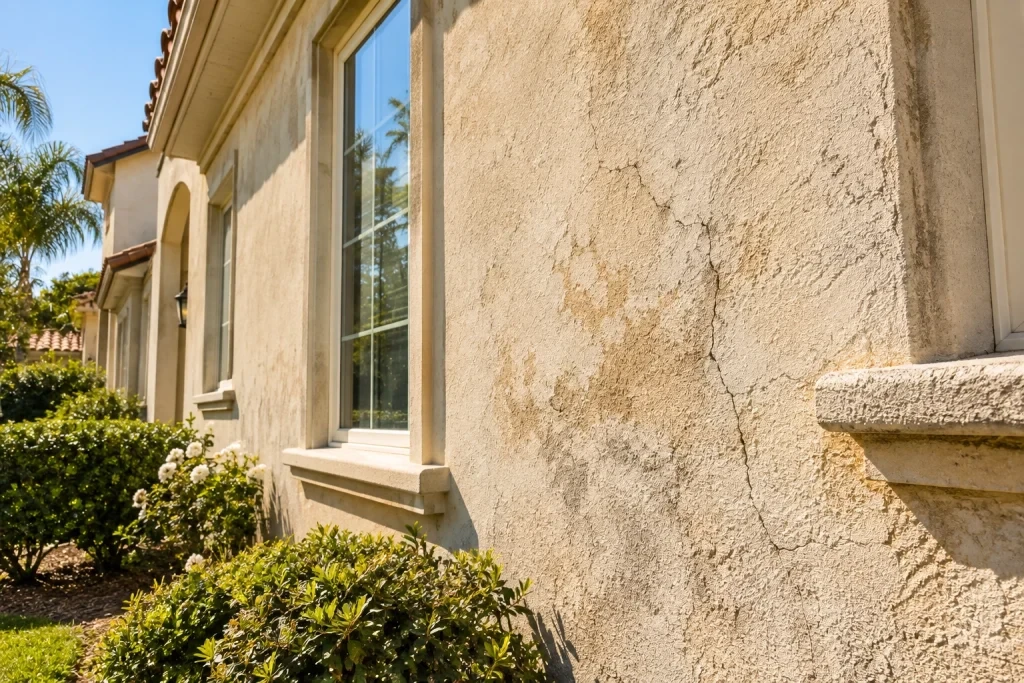
Fading is one of the easiest signs to notice. Areas exposed to direct sunlight may lose their original appearance over time, making the exterior look uneven.
Discoloration can also come from dirt, environmental exposure, or stains. Cleaning may solve some surface problems, but widespread fading may indicate that the exterior needs repainting.
Small cracks can occur in stucco, but not every crack means the entire exterior needs to be repainted.
Before painting, cracks and damaged areas should be inspected and repaired as needed. Painting over an unresolved problem can leave the underlying issue hidden rather than properly addressed.
If you are unsure whether damage is cosmetic or requires repair, a professional exterior inspection can help determine the appropriate next step.
Peeling or bubbling paint can indicate that the existing coating is no longer bonding properly to the surface. Chalking can also occur as exterior paint weathers.
These conditions should be addressed before applying a new coating. Simply adding another layer over failing paint can lead to the same problem returning.
Homeowners can also watch for other exterior paint warning signs when checking the condition of their home’s exterior.
Dark stains, water marks, or areas of persistent discoloration deserve attention before painting.
A new coat of paint should not be used to hide an active moisture problem. The source should be identified and corrected first so the new finish has a sound surface to adhere to.
Painting is more than a cosmetic update. As part of regular stucco home maintenance, a properly prepared and painted exterior can help maintain the surface and protect the home’s appearance.
Regular exterior painting can provide several practical benefits:
A well-maintained exterior can also contribute to the property’s overall appearance and value. The right preparation and coating matter just as much as the color selected, particularly when homeowners are planning a broader exterior improvement project.
The best paint for stucco depends on the condition of the surface, the existing coating, and the requirements of the project. Two common options for stucco exteriors are acrylic and elastomeric coatings.
Acrylic exterior paint is commonly used for stucco because it can provide a durable finish while allowing the surface to breathe.
It is available in many colors and finishes, making it a flexible option for homeowners who want to refresh the appearance of their stucco home.
The surface still needs proper preparation before acrylic paint is applied. Cracks, dirt, loose material, and other surface issues should be addressed first.
Elastomeric coatings are thicker and more flexible than standard exterior paint. They are designed to stretch and move with the surface, which can make them useful for certain stucco applications.
However, elastomeric paint is not automatically the right choice for every home. The existing stucco, previous coating, surface condition, and moisture considerations should be evaluated before selecting it.
When choosing stucco paint, consider more than color. The coating should be compatible with the existing surface and appropriate for the home’s exposure and condition.
A professional can evaluate the stucco and existing finish before recommending a coating. This helps reduce the risk of choosing a product that does not perform well on the particular surface.
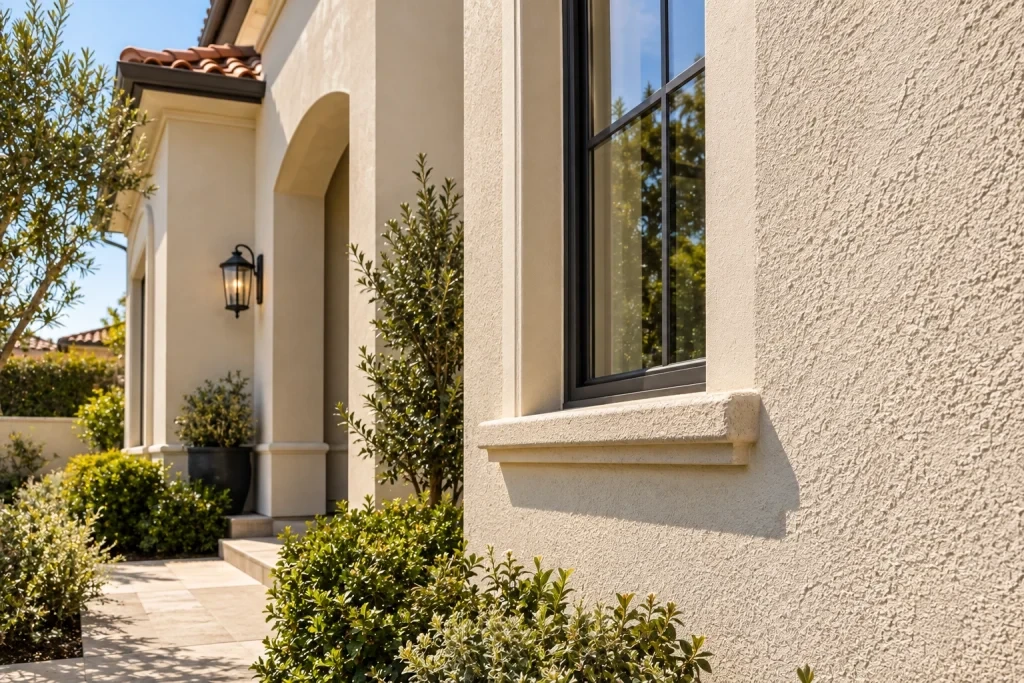
Good preparation is one of the most important parts of stucco exterior painting. Applying paint to a dirty, damaged, or poorly prepared surface can affect the final appearance and durability.
Start by checking the stucco for cracks, holes, damaged areas, loose material, and signs of moisture.
Repairs should be completed before painting. The goal is to create a stable, clean surface rather than using paint to cover existing problems.
For larger exterior projects, professional exterior painting services can include the preparation needed before the final coating is applied.
The surface should be cleaned to remove dirt, dust, stains, and other buildup. Depending on the condition of the stucco, the cleaning method should be selected carefully to avoid unnecessary surface damage.
After cleaning and repairs, the surface needs to be properly prepared for the selected coating. Applying paint too soon can affect adhesion and the finished result.
Before painting begins, windows, doors, fixtures, plants, walkways, and other areas that should not receive paint need to be protected.
Proper preparation also helps create cleaner edges and a more consistent finish. Taking time to protect surrounding areas can make the entire project look more professional when complete.
The time required to paint a stucco house depends on its size, surface condition, number of repairs, preparation requirements, and the painting method.
A straightforward home with limited repairs may move through preparation and painting relatively quickly. A larger property with extensive cracking, damaged stucco, difficult access, or multiple coats may take longer.
Weather can also affect the schedule. Painting should be performed under suitable conditions so the coating can properly dry and cure.
Because preparation is a major part of the process, homeowners should avoid choosing a contractor based only on how quickly they promise to finish. A proper inspection and preparation plan are important parts of a quality stucco house painting project.
Southern California generally provides many opportunities for exterior painting, but the specific weather conditions still matter.
Dry, moderate conditions are generally preferable for painting stucco. Excessive moisture, rain, very high temperatures, or other unfavorable conditions can interfere with application and drying.
For coastal homes, moisture and marine conditions should also be considered when planning the project. Inland properties may face more intense heat and direct sun exposure.
Rather than choosing a date based only on the season, check the expected weather and the condition of the stucco. A professional painting team can also help determine whether the surface is ready for coating.
Stucco maintenance does not require repainting on an exact schedule. A 5-to-10-year range can be a useful general guideline, but fading, cracking, peeling, stains, sun exposure, moisture, and the condition of the existing coating are better indicators of when your home needs attention.
Before painting, inspect and repair the stucco, clean the surface, choose a compatible coating, and protect surrounding areas. Proper preparation can make a major difference in the final appearance and performance of the paint.
If your stucco home is showing signs of fading, cracking, or peeling, Home Renew 360 can help you determine whether it is time for a new exterior paint job. Contact Home Renew 360 to discuss your home’s stucco painting needs and plan the next step.
A stucco house often needs repainting about every 5 to 10 years, but the actual timing varies. Sun exposure, weather, paint quality, stucco condition, and maintenance can all affect the schedule.
Yes, in some cases. The existing coating must be properly bonded and the stucco should be clean, sound, and free from significant damage. Peeling or failing paint should be addressed before applying a new coating.
Neglected paint can become faded, chalky, peeling, or damaged. More importantly, failing to inspect the exterior can allow cracks, moisture problems, and other issues to go unnoticed. Regular maintenance helps identify these conditions earlier.
Acrylic and elastomeric coatings are common options for stucco exteriors. The appropriate choice depends on the stucco’s condition, existing coating, exposure, and project requirements. Proper surface preparation is important regardless of which coating is selected.