off-site-storage
On-Site vs Off-Site Storage During a Whole House Remodel

On-site storage keeps belongings accessible, while off-site storage offers better protection during major renovations. Learn which option best fits.
Choosing between on-site and off-site storage depends on the size of your remodel, the items you need to protect, and whether you’ll remain in your home during construction. The right storage solution keeps your belongings safe, gives contractors room to work, and helps your remodel progress more efficiently.
A whole house remodel affects nearly every room, making preparation just as important as the construction itself. While homeowners often focus on design selections and budgets, planning where furniture, electronics, clothing, and personal belongings will go can prevent unnecessary stress later. This guide compares on-site and off-site storage, explains when each option works best, and helps you decide which solution fits your remodeling project.
There isn’t one storage solution that’s right for every remodel.
If only certain areas of your home are being renovated, keeping some belongings on-site may be practical. However, when construction affects most or all of the house, moving items to an off-site storage facility often provides better protection and gives contractors the space they need to work efficiently.
The decision also depends on how extensive your project will be. A complete home remodeling project usually involves multiple trades working throughout the home, making clutter-free work areas essential for both safety and productivity. Thinking about storage early, while planning a complete home remodel, helps prevent delays once demolition and construction begin.
On-site storage can be a practical option when construction is limited to specific parts of the home and other areas remain unaffected.
Instead of moving everything off the property, homeowners may choose to keep furniture and household items in finished rooms, garages, portable storage containers, or other protected spaces. This approach keeps belongings close by while reducing the time needed to pack and unpack.
On-site storage is often suitable when:
Although keeping belongings nearby is convenient, it’s important to remember that remodeling creates dust, vibration, and frequent movement of materials. Even carefully covered furniture can be exposed to fine dust during demolition, sanding, and flooring installation.
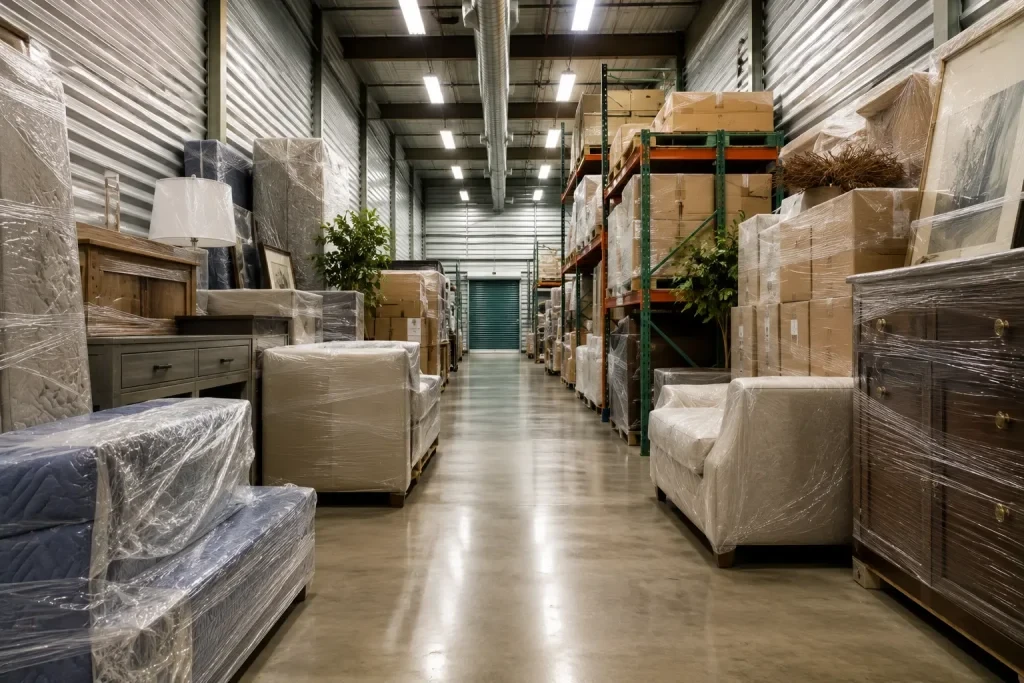
For extensive renovations, off-site storage often provides greater protection and flexibility.
When an entire home is being remodeled, nearly every room may become part of the construction zone at some stage of the project. Removing furniture and personal belongings creates a cleaner workspace, reduces the risk of accidental damage, and allows contractors to move more efficiently between work areas.
Off-site storage is usually the better choice when:
Homeowners preparing for home remodeling projects often discover that removing unnecessary belongings before construction begins makes demolition, framing, electrical work, drywall installation, and finishing phases significantly easier. It also reduces the amount of cleaning required once the project is complete.
| Feature | On-Site Storage | Off-Site Storage |
|---|---|---|
| Convenience | Easy daily access | Requires travel to storage facility |
| Protection | Moderate protection from dust and debris | Better protection for valuable belongings |
| Cost | Often lower | Additional rental costs may apply |
| Accessibility | Immediate | Limited to facility access hours |
| Security | Depends on home security | Often includes monitored security features |
| Best For | Small or phased remodels | Large-scale or whole house remodels |
Neither option is automatically better. The right choice depends on the scope of your project, the value of your belongings, and whether your home will remain livable throughout construction.
Choosing the right storage solution is only part of preparing for a whole house remodel. Taking time to organize your home before construction starts helps protect your belongings and allows the project to move forward with fewer interruptions.
Start by deciding what will stay, what will be stored, and what can be donated or discarded. Many homeowners discover they have far more items than they need, making a remodel a good opportunity to declutter before moving furniture into storage.
A practical preparation plan should include:
Preparing your home early also makes it easier to follow a complete home remodeling checklist because important tasks such as packing, protecting valuables, arranging temporary storage, and coordinating access are completed before demolition begins rather than after construction is already underway.

Storage isn’t the only consideration during a whole house remodel. The project’s timeline, budget, and overall scope all affect which option makes the most sense.
A remodel expected to last only a few weeks may not justify moving everything into a storage facility. However, projects lasting several months often become much easier to manage when household belongings are stored elsewhere.
Having a realistic understanding of the complete home remodel timeline helps homeowners estimate how long furniture and personal belongings may need to remain in storage, making it easier to choose between temporary on-site solutions and longer-term off-site facilities.
Off-site storage introduces an additional expense, but it can also reduce the likelihood of accidental damage to valuable furniture and personal belongings.
When planning your remodeling budget, remember that storage is only one part of the overall investment. Construction, materials, permits, labor, and finishing work all contribute to the final cost. Understanding cost of complete Home Remodeling helps place storage expenses into the context of the entire project rather than viewing them as an isolated cost.
Keeping belongings on-site offers immediate access, which is helpful if you’re still living in the home. Off-site storage, however, provides a cleaner and less crowded work environment that often benefits both homeowners and contractors during larger renovations.
Both on-site and off-site storage have their advantages. The right choice depends on the size of your remodel, the value of your belongings, your living arrangements during construction, and how much of your home will become an active work area.
If only a few rooms are being updated, carefully organized on-site storage may be all you need. For a complete home remodel affecting nearly every part of the house, off-site storage usually offers better protection while giving construction teams the space they need to work safely and efficiently.
Planning ahead is one of the simplest ways to reduce stress during a remodel. Choosing the right storage solution before construction begins helps protect your belongings, keeps the project organized, and allows everyone involved to focus on creating the finished home you’ve envisioned.
It can be, provided construction is limited and belongings are properly protected. For larger projects involving multiple rooms, off-site storage generally offers better protection from dust, debris, and accidental damage.
Not always. If certain rooms won't be affected by construction, some furniture may remain in the home. Your contractor can help determine which areas should be completely cleared before work begins. Not always. If certain rooms won’t be affected by construction, some furniture may remain in the home. Your contractor can help determine which areas should be completely cleared before work begins.
For extensive renovations, many homeowners find the added protection, improved organization, and increased workspace well worth the investment.
Storage should be planned before demolition begins. Having your belongings packed and relocated ahead of construction helps prevent delays and allows contractors to begin work immediately.