drought-tolerant-native-plants
Drought-Tolerant Native Plants: The Best Low-Water Options for SoCal Yards
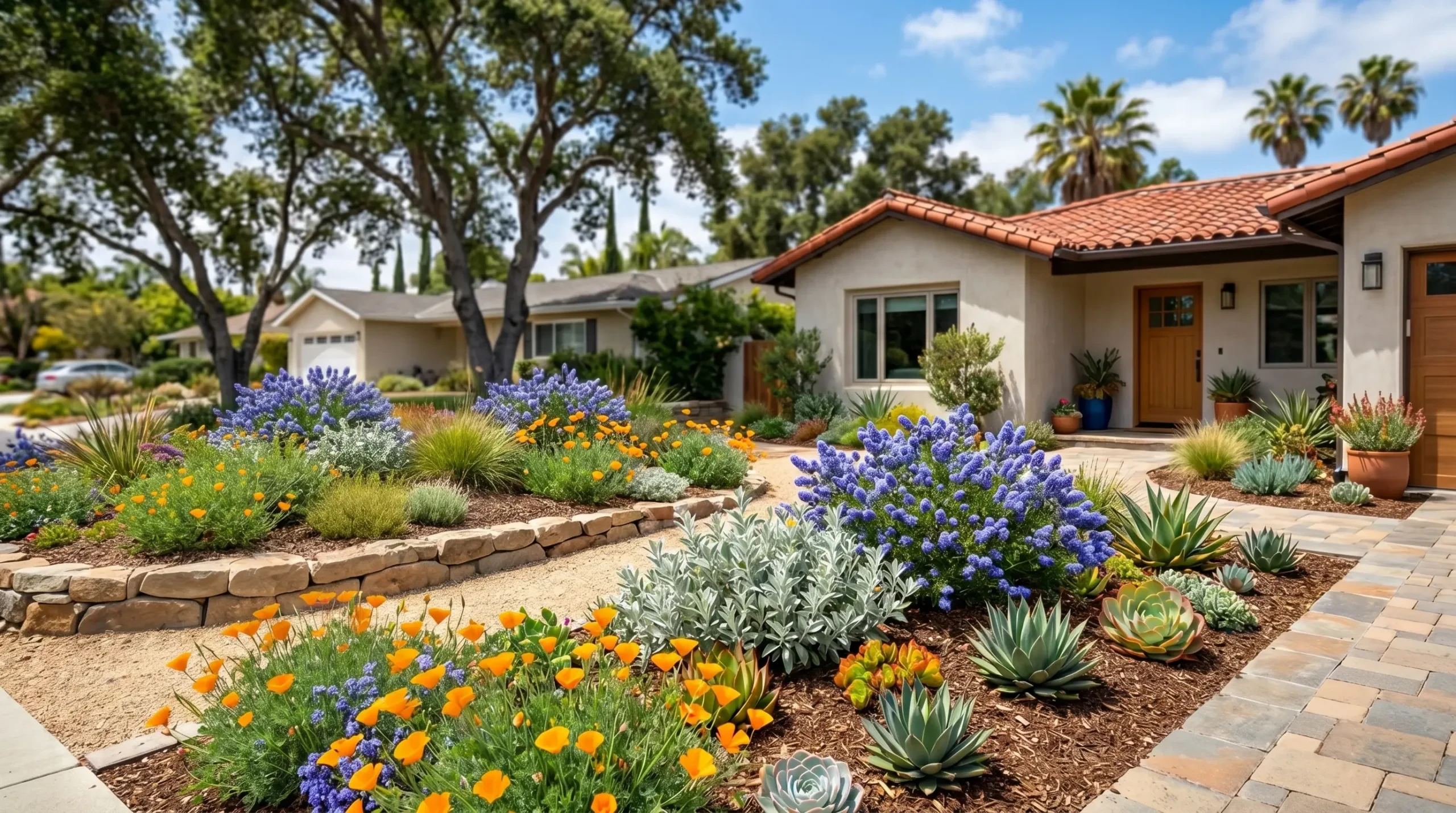
Transform your Southern California yard into an eco-friendly oasis. Discover the best low-water native plants to slash your water bill & boost curb appeal.
Southern California residents know the drill, endless sunshine, beautiful beaches, and strict water restrictions. Keeping a lush, green, traditional grass lawn in this region often feels like an expensive uphill battle against our natural climate.
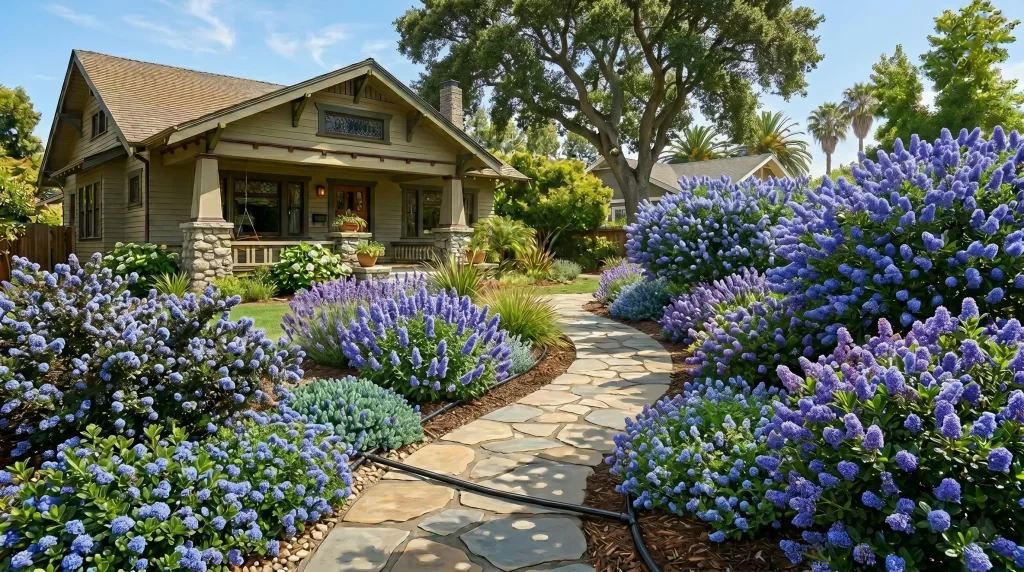
But letting your yard turn into a barren patch of dry dirt isn’t the only solution. By switching to drought-tolerant, native plants, you can create a vibrant, thriving outdoor space that slashes your water bill and perfectly suits the local environment.
For decades, the standard American dream included a sprawling, thirsty green lawn. However, as droughts become more frequent and municipal water limits grow stricter, that ideal is rapidly changing. Traditional grass requires thousands of gallons of water annually just to stay green.
By embracing an outdoor remodel that prioritizes climate-appropriate greenery, Southern California homeowners are discovering that they can maintain gorgeous curb appeal while drastically reducing their environmental footprint and utility costs. To explore all of your back-and-front-yard options, check out our full range of exterior home improvement services.
Before we dive into the specific plant options, let’s talk about why “going native” is the smartest move you can make for your landscaping.
Native plants have adapted over thousands of years to thrive in our dry, arid climate. Once established, they require a fraction of the water that a traditional lawn needs. This helps you do your part for state-wide conservation efforts—like those championed by Save Our Water —while keeping your water bill as low as possible.
Forget the weekly mowing, fertilizing, and heavy pruning. Native plants naturally resist local pests and diseases. Because they are designed to survive in Southern California soil without chemical fertilizers, they are incredibly low-maintenance once their root systems take hold.
When you remove native flora to plant grass, local wildlife loses its food source. A native garden quickly becomes a bustling sanctuary for local birds, bees, and butterflies whose natural habitats are shrinking due to urban development.
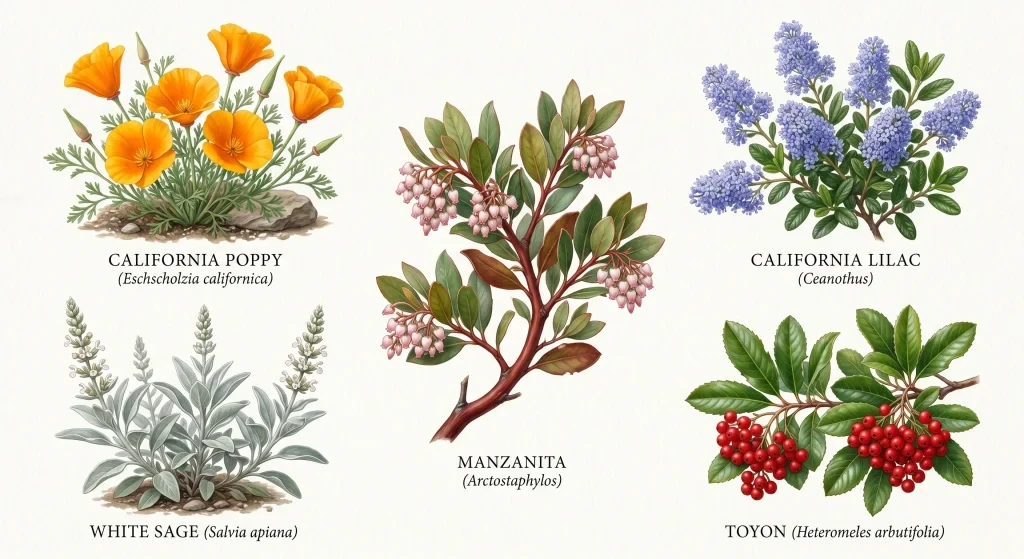
Ready to transform your yard? Here are some of the most reliable, beautiful, and resilient native plants that thrive in Southern California:
This stunning evergreen shrub is famous for its explosive blooms of vibrant blue and purple flowers in the spring. It is incredibly drought-tolerant and thrives in full sun. It is perfect for creating colorful borders or adding a pop of color against hardscaping and retaining walls.
A true staple of the Southern California landscape, White Sage features striking silvery-white foliage and tall spikes of pale flowers. It is highly aromatic and practically thrives on neglect once its roots are fully established in well-draining soil.
You simply cannot have a SoCal native garden without our state flower! These bright, cheerful orange blooms reseed themselves easily, offering a brilliant splash of color every spring with zero extra watering required.
Known for their smooth, dark red bark and twisted, architectural branches, Manzanitas are striking additions to any garden. They range from low groundcovers to large shrubs, making them highly versatile for any custom landscaping project.
Often called “California Holly,” this large evergreen shrub produces bright red berries in the winter, providing year-round visual interest and crucial food for local birds. For more detailed botanical information and planting guides for these and other local species, the California Native Plant Society is an excellent scientific resource.
Planting the right greenery is only half the battle. To ensure your low-water yard flourishes year after year, keep these best practices in mind:
Hydrozoning is the practice of planting species with similar irrigation requirements close together. This prevents you from overwatering your drought-tolerant native plants just to keep a single, thirstier plant nearby alive.
Ditch the traditional sprinkler system. Drip irrigation delivers water directly to the base and root zone of your plants, eliminating water waste from evaporation and wind runoff.
A thick layer of organic mulch keeps the soil cool, suppresses weeds, and traps precious moisture under the hot SoCal sun. Alternatively, blending native plant borders with pavers or high-quality artificial turf is a highly effective, zero-water remodeling solution for those who still want functional space for entertaining.
Ditching a water-guzzling lawn does not mean sacrificing beauty. With the right planning, hardscaping, and plant selection, your yard can be a colorful, eco-friendly oasis that practically takes care of itself.
If you are ready to upgrade your curb appeal but aren’t sure where to start, the experts at Home Renew 360 are here to help. We specialize in custom, drought-tolerant landscaping and yard designs that fit your aesthetic and the Southern California climate perfectly.
Stop fighting the drought and start working with it. Contact us today for a free consultation on your next landscaping project!
Yes, but mostly in the beginning! During the first 1 to 2 years, native plants need regular watering to establish deep, healthy root systems. Once they are fully established, they require very little supplemental water and can survive mostly on Southern California’s natural rainfall.
Absolutely. Many local water districts and city municipalities in Southern California offer “Turf Replacement” or “Cash for Grass” rebate programs. These programs actually pay homeowners a set dollar amount per square foot to remove water-heavy grass and replace it with drought-tolerant landscaping or artificial turf.
While a full outdoor remodel and new plant installation require an upfront investment, drought-tolerant yards actually save you money in the long run. The return on investment comes quickly through significantly lower monthly water bills, zero need for chemical fertilizers, and drastically reduced maintenance and lawn care costs.
Not if it is designed correctly! It is a common misconception that native yards are just dry brush and rocks. While some native species do go dormant in late summer, a professional landscape design uses a strategic mix of evergreens, vibrant succulents, colorful spring bloomers, and attractive hardscaping to ensure your yard has visual interest and color all year long.