Artificial Turf vs Real Grass: Which Is Better for California Yards?
Frequently asked questions
With proper installation and basic maintenance, high-quality artificial turf can easily last 15 to 20 years. Modern turf is treated with UV inhibitors to prevent the strong California sun from fading its vibrant green color.
Direct sunlight alone will not melt your artificial turf, even on a 100-degree California day. However, highly reflective energy-efficient windows can act like a magnifying glass, bouncing a concentrated beam of intense heat onto the turf that can cause it to melt.
It depends entirely on your specific city and your Homeowners Association (HOA). Many cities require a basic landscaping permit to ensure proper drainage.
Deciding between artificial turf vs real grass? Compare upfront costs, water-saving benefits, and daily maintenance to find the best California lawn.
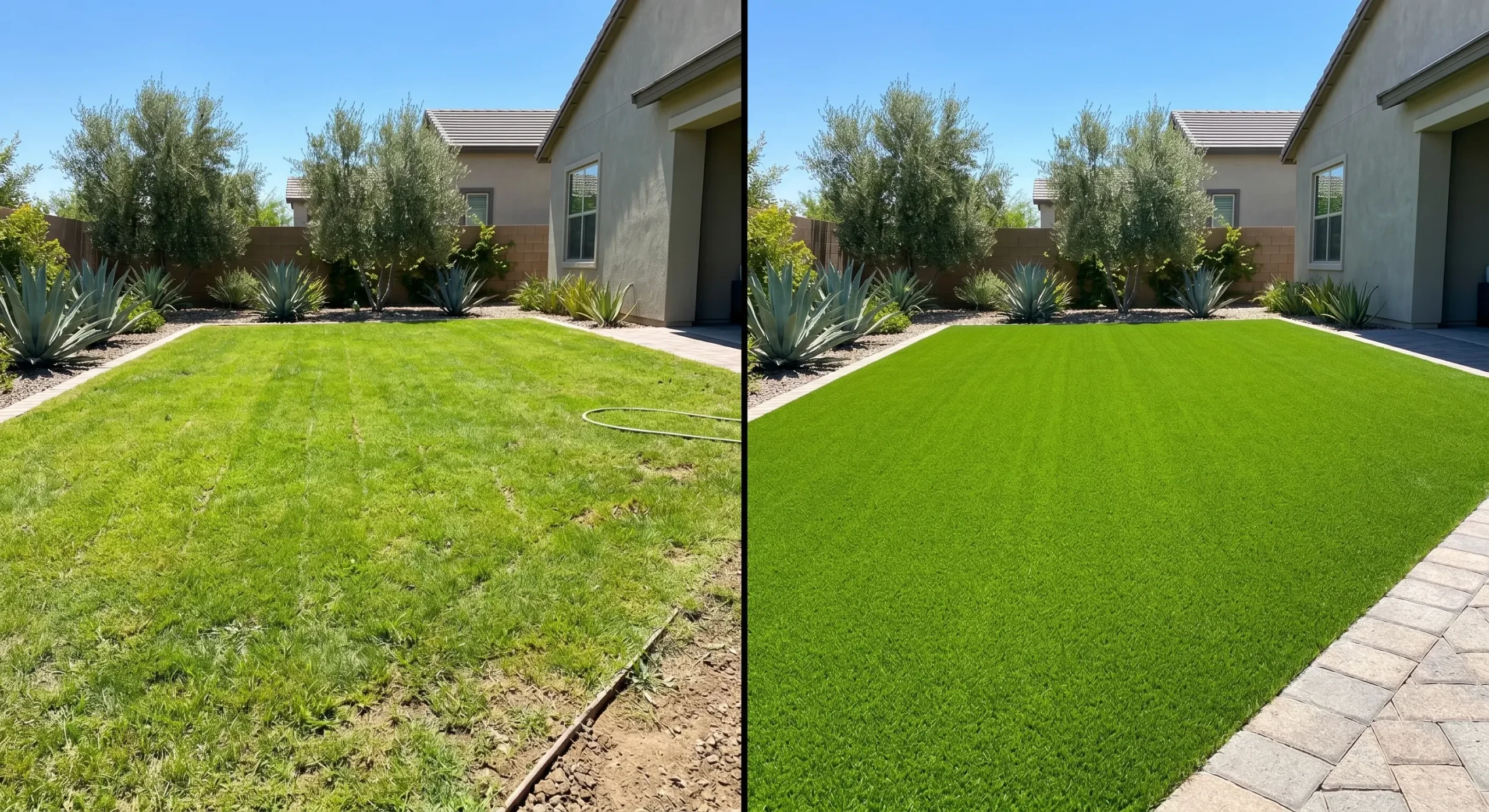
Deciding between artificial turf and real grass is one of the biggest landscaping choices for California homeowners. You want a beautiful, green yard. However, you also have to deal with high water bills, strict drought rules, and intense summer heat.
Which option is actually the best for your home and your wallet? Let’s dive into the ultimate comparison to help you make the smartest choice for your California yard.
Why California’s Climate Dictates Your Lawn Choice
Landscaping in California is unlike anywhere else. Our unique environment forces homeowners to think differently. You constantly have to weigh the heavy cost of watering a lawn against the heat of the summer sun.
Navigating Strict Water Restrictions and Droughts
California faces ongoing droughts and strict water regulations. Because of this, keeping a natural grass lawn green during the summer is incredibly expensive.
Real grass demands hundreds of gallons of water a week. If you break watering rules, you can even face heavy city fines.
Dealing with Intense Heat and Sun Exposure
The California sun is brutal. Natural grass has a built-in cooling effect, which helps keep your yard comfortable on a 100-degree day.
On the other hand, artificial turf absorbs heat. Without proper cooling infill or shade, synthetic grass can get very hot to the touch in direct afternoon sunlight.
The Environmental Impact of Fertilizers and Plastics
Both lawns impact the environment in different ways. Natural grass requires chemical fertilizers and weed killers. When it rains, these toxic chemicals run off into our local water systems.
Artificial turf avoids these chemicals, but it is manufactured using synthetic plastics and rubber, which have their own environmental footprint.
Cost Breakdown: Artificial Turf vs Real Grass
Money is a major factor in this decision. While turf requires a big upfront investment, real grass slowly drains your wallet month after month. Here is a realistic look at the numbers.
Lawn Type
Average Upfront Cost (Per Sq. Ft.)
Annual Maintenance Cost
Long-Term ROI (10 Years)
Artificial Turf
$8.00 – $15.00
$50 – $150 (Water for rinsing/brushing)
High (Pays for itself in 3-5 years)
Natural Grass (Sod)
$1.00 – $3.00
$1,000 – $2,500+ (Water, mowing, fertilizer)
Low (Constant ongoing expense)
Natural Grass (Seed)
$0.10 – $0.50
$1,000 – $2,500+ (High initial water needs)
Low (Requires heavy ongoing care)
Top Pros and Cons of Artificial Turf
Is synthetic grass the right choice for your lifestyle? Here is a quick look at the best and worst parts of having an artificial lawn.
Pros of Artificial Turf
Massive Water Savings: Dramatically lowers your monthly utility bills in drought-prone California.
Zero Mowing Required: Frees up your weekends and eliminates the need to hire a weekly gardening service.
Year-Round Perfection: Stays vibrantly green and lush 365 days a year, regardless of the weather.
Cons of Artificial Turf
High Initial Investment: The upfront cost of materials and professional installation is significantly higher than sod.
Heat Retention: Can become uncomfortable to walk on barefoot during peak afternoon summer heat.
Top Pros and Cons of Real Natural Grass
Do you love the classic feel of real soil and fresh-cut grass? Here is what you need to consider before planting a natural lawn.
Pros of Real Natural Grass
Low Upfront Cost: Extremely affordable to install initially, whether using seed or laying fresh sod.
Natural Cooling Effect: Absorbs heat and keeps your yard noticeably cooler during hot California summers.
Ecological Benefits: Produces oxygen, filters groundwater, and supports local biodiversity and soil health.
Cons of Real Natural Grass
Expensive Ongoing Maintenance: Requires constant watering, mowing, weeding, and fertilizing.
Susceptible to Damage: Easily turns brown from drought conditions, pet urine, diseases, and heavy foot traffic.
Lifestyle Factors: Pets, Kids, and Curb Appeal
Your yard is meant to be used and enjoyed. Beyond the cost and climate, you have to think about how your lawn actually performs for your family, your pets, and your neighborhood image every single day.
Durability for High-Traffic Play Areas
Kids play hard, and natural grass often pays the price. Heavy foot traffic quickly turns a real lawn into a patch of dirt or mud. It requires weeks of rest to recover.
Artificial turf is incredibly durable. It withstands heavy sports, running kids, and playground equipment without ever creating mud or wearing thin.
Managing Dogs: Pet-Friendly Solutions and Odor
Dogs love both real and synthetic grass, but the cleanup is different. Natural soil absorbs pet urine and naturally breaks down odors, though the acid will create ugly yellow dead spots.
Modern artificial turf solves the yellow spots and features specialized drainage and antimicrobial infill. However, you must routinely rinse pet areas on turf to prevent odors from building up in the summer heat.
Maintaining Maximum Real Estate Curb Appeal
A beautiful yard adds instant value to your property. A perfectly green, manicured artificial lawn boosts your curb appeal year-round.
On the other hand, a natural lawn that has turned dead and brown due to water restrictions can make your entire house look neglected, potentially hurting your property value.
The Reality of Long-Term Lawn Maintenance
It is easy to forget how much physical work goes into a yard. Let’s look at the actual time and labor required to keep both yard types looking their absolute best.
The Weekly Grind of Mowing and Edging
Real grass is a part-time job. Every single weekend from spring to fall, you have to deal with the loud, sweaty chore of pushing a mower.
Then, you have to use a trimmer to edge the borders and sweep up the clippings. If you do not do it yourself, you will pay a gardener a hefty monthly fee to do it for you.
Fertilizing, Aerating, and Weed Control Demands
Watering and mowing are just the start for natural grass. To keep real grass healthy and disease-free, you must regularly apply chemical fertilizers.
You also have to physically aerate the soil to let roots breathe and constantly spray or pull invasive weeds.
Sweeping, Rinsing, and Brushing Synthetic Turf
It is important to know that artificial turf is “low maintenance,” but it is not “zero maintenance.” To keep synthetic grass looking fluffy and realistic, you occasionally need to brush the blades upright with a stiff broom. You also need to rinse off dust and sweep away fallen autumn leaves.
Conclusion
Choosing between artificial turf and real grass ultimately comes down to your priorities. If you want a cool, natural environment and do not mind the weekly labor and high water bills, real grass is a classic choice. However, if you want to drastically cut your water usage, eliminate your weekend chores, and enjoy a perfectly green yard all year long, artificial turf is a brilliant long-term investment.
We use cookies to keep this site working. With your permission we also use them to see how the site is used, so we can make it better. You can change your mind at any time.
Keeps the site working: security, forms and your cookie choice. Always on.
Shows us which pages are visited, so we can improve them. No advertising.