Regularly changing your home’s air filters is essential for maintaining clean indoor air and keeping your HVAC system running efficiently. A dirty filter makes your system work harder, increases energy costs, and reduces overall comfort. It can also lead to expensive repairs if ignored for too long. Simple filter replacement helps protect your home, your health, and your long-term maintenance budget.
Why Air Filters Matter in Your Home
Air filters play an important role in your HVAC system by trapping dust, dirt, pollen, pet dander, and other airborne particles. This helps keep indoor air cleaner while protecting heating and cooling equipment from buildup and damage.
A clean air filter improves airflow and helps your HVAC system work more efficiently. It also supports better temperature control throughout the home. Without proper filtration, both air quality and system performance begin to decline.
What Happens When You Don’t Change Air Filters
Ignoring air filter replacement creates problems that affect both comfort and system performance. Over time, dirt and debris block airflow, forcing your HVAC system to work harder than necessary.
This leads to higher costs, poor indoor air quality, and a greater risk of expensive breakdowns. Small neglect can quickly turn into major repair issues.
Restricted Airflow and Poor HVAC Performance
A clogged air filter limits the amount of air moving through your HVAC system. This reduces heating and cooling efficiency and makes rooms feel less comfortable.
Poor airflow also forces the system to run longer to reach the desired temperature. This adds extra strain and reduces overall performance.
Higher Energy Bills
When airflow is blocked, your HVAC system uses more energy to maintain indoor comfort. It must work harder and run longer to cool or heat your home properly.
This directly increases monthly utility bills and reduces overall energy efficiency. Even a simple dirty filter can create unnecessary energy waste.
More Dust, Allergies, and Poor Indoor Air Quality
Dirty air filters cannot properly trap airborne particles like dust, pollen, and pet dander. These pollutants stay in circulation and affect the air your family breathes every day.
This often leads to more dust inside the home and stronger allergy symptoms. Poor filtration can also make asthma and respiratory issues worse.
Increased Risk of Repairs and System Failure
When the system works harder for long periods, important components experience more wear and tear. This increases the chance of breakdowns and costly repairs.
In severe cases, airflow restrictions can damage the blower motor or cause the HVAC system to fail completely. Regular filter changes help prevent these avoidable problems.
Benefits of Changing Air Filters Regularly
Replacing air filters on time is one of the easiest ways to improve home comfort and protect your HVAC system. It supports better performance, cleaner air, and lower long-term maintenance costs.
A small maintenance step can prevent major repair expenses and improve daily living conditions throughout the year.
Better Indoor Air Quality
Clean filters trap airborne particles before they spread through your home. This helps reduce dust, pollen, mold spores, and pet dander inside living spaces.
Better air quality creates a healthier environment, especially for children, seniors, and people with allergies or asthma.
Lower Energy Bills
A clean air filter allows air to move freely through the HVAC system. This helps heating and cooling equipment work efficiently without using extra energy.
Better airflow reduces system strain and helps lower monthly utility costs. It also improves overall home comfort.
Longer HVAC System Life
Regular filter replacement reduces pressure on important HVAC components like the blower motor and fan. This helps the system operate smoothly for a longer period.
Less strain means fewer performance issues and a longer lifespan for your heating and cooling equipment.
Fewer Repairs and Breakdowns
Clean filters prevent dust buildup inside the HVAC system, which reduces the risk of mechanical problems. This lowers the chances of emergency service calls and unexpected repair costs.
Preventive maintenance always costs less than major system repairs or full replacement.
How Often Should You Change Your Home’s Air Filters?
Most homeowners should change air filters every 1 to 3 months, depending on the filter type and home conditions. Homes with pets, smokers, or family members with allergies may need more frequent replacement.
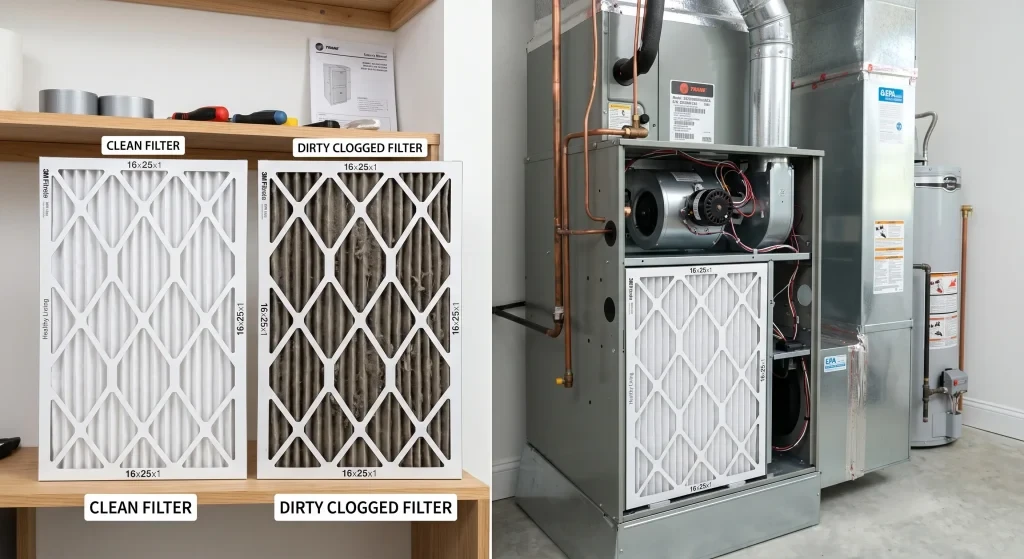
Larger families and homes with constant HVAC use also require closer attention. Pleated filters often last longer than basic fiberglass filters, but regular inspection is still important. Checking the filter monthly helps prevent airflow problems before they affect system performance.
Signs Your Air Filter Needs Replacement
Many homeowners forget to check air filters until bigger HVAC problems appear. Recognizing the warning signs early helps prevent poor airflow, higher bills, and system damage.
Common signs your air filter needs replacement include:
- Visible dust and dirt buildup on the filter surface
- Weak airflow coming from vents and uneven room temperatures
- Higher energy bills without major changes in system usage
- More dust collecting quickly around furniture and surfaces
- Increased allergy symptoms like sneezing, coughing, or irritation
- HVAC system running longer than usual to maintain comfort
- Unusual odors coming from vents during operation
Choosing the Right Air Filter for Your Home
Not all air filters provide the same level of protection and performance. Choosing the right filter affects indoor air quality, HVAC efficiency, and how often replacements are needed.
Fiberglass vs Pleated Filters
Fiberglass filters are the most basic and affordable option for homeowners. They mainly protect the HVAC system from large dust particles but offer limited indoor air quality improvement.
Pleated filters provide stronger filtration by trapping smaller particles like pollen, pet dander, and mold spores. They usually last longer and are a better choice for homes focused on cleaner air and better system protection.
Understanding MERV Ratings
MERV stands for Minimum Efficiency Reporting Value, and it measures how effectively a filter captures airborne particles. Higher MERV ratings mean stronger filtration performance.
Most residential homes work well with filters rated between MERV 8 and MERV 13. This range balances good air quality with proper airflow for most HVAC systems.
When Higher Filtration Is Worth It
Higher filtration becomes more important in homes with pets, allergy sufferers, asthma concerns, or poor outdoor air quality. Stronger filters help remove smaller pollutants and improve breathing comfort indoors.
However, using very high-rated filters without checking HVAC compatibility can restrict airflow. It is important to choose a filter that matches both health needs and system capacity.
Common Mistakes Homeowners Make with Air Filters
Many HVAC problems happen because homeowners overlook simple air filter maintenance. Small mistakes can reduce efficiency, increase repair costs, and shorten system life.
One common mistake is waiting too long to replace the filter. Many people only change it after airflow problems become noticeable. Another issue is buying the wrong filter size, which allows unfiltered air to bypass the system.
Some homeowners also choose the highest MERV rating without checking if their HVAC system can handle it. This can restrict airflow and create performance problems. Ignoring regular monthly inspections is another mistake that often leads to preventable repairs.
Simple habits and regular checks make a big difference in long-term HVAC performance.
Final Thoughts
Regularly changing your home’s air filters is a small task with major long-term benefits. It improves indoor air quality, lowers energy bills, protects your HVAC system, and helps prevent expensive repairs.
Consistent filter maintenance keeps your home more comfortable and your heating and cooling system working efficiently. A simple replacement schedule can save money, improve health, and extend the life of your HVAC equipment.