The roof replacement cost in California is projected to rise in 2026 due to increasing material prices, labor shortages, and stricter environmental regulations. Homeowners can expect higher expenses for popular options like asphalt shingles, clay tiles, and metal roofs as supply chain fluctuations and new energy-efficiency standards continue to shape the market. Understanding these trends early helps homeowners plan smarter, budget accurately, and choose materials that deliver both durability and long-term value.
What Is the Average Roof Replacement Cost in California in 2026?
The average roof replacement cost in California in 2026 typically ranges between $10,000 and $25,000, depending on the roofing material, roof size, design complexity, and labor rates in your area. While asphalt shingles remain the most popular and cost-effective option, more homeowners are turning toward metal and tile roofs for energy efficiency and long-term savings.
Average Cost Range for 2026
| Roof Type | Estimated Cost Range | Durability & Notes |
|---|---|---|
| Asphalt Shingles | $9,000 – $15,000 | Budget-friendly, easy to install, and low maintenance |
| Metal Roofing | $12,000 – $20,000 | Long-lasting, energy-efficient, and ideal for California’s climate |
| Clay or Tile Roofing | $15,000 – $30,000 | Premium look, high durability, but heavier structure |
| Flat/TPO Roofing | $8,000 – $14,000 | Cost-effective for modern or low-slope roofs |
Cost per Square Foot or Roofing Square
Roofing contractors often price by the roofing square, which equals 100 square feet. In California, the average cost per square foot in 2026 ranges from $4.50 to $10, depending on material choice and roof design. For a 2,000-square-foot home, homeowners should expect a total cost between $9,000 and $20,000 for a full roof replacement.
Regional Price Differences of Roof Replacement
Prices also vary across the state.
- Southern California: Typically moderate due to a competitive contractor market and favorable weather.
- Northern California: Higher costs due to stricter environmental codes, heavier rainfall, and increased labor expenses.
- Central California: Generally more affordable, with lower permit fees and fewer climate challenges.
Key Factors That Affect Roof Replacement Cost in 2026
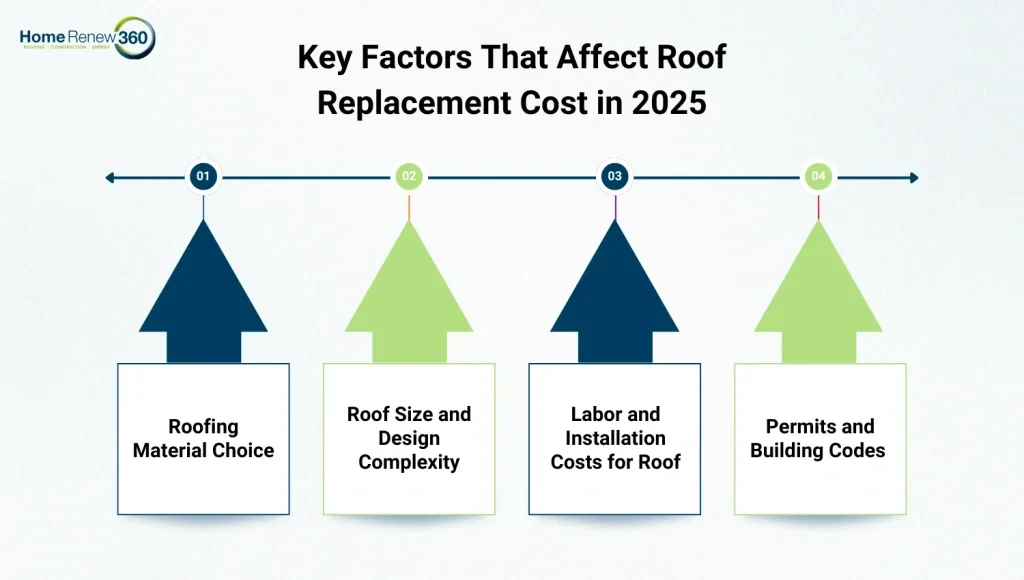
Several factors influence the roof replacement cost in California, and understanding them helps homeowners budget more accurately. The total cost depends on the materials chosen, roof size, labor rates, and local building regulations, all of which can vary across different parts of the state.
1. Roofing Material Choice
The material you select has the greatest impact on your roofing budget. Asphalt shingles remain the most affordable, while tile and metal roofing are more durable and energy-efficient but cost more upfront. Homeowners looking to make their homes more sustainable can explore solar panel installation services to offset long-term energy expenses.
2. Roof Size and Design Complexity
Larger or more complex roof structures require more labor and materials, which directly increases total cost. Homes with steep slopes, skylights, or multiple levels often require specialized installation techniques that add to project expenses.
3. Labor and Installation Costs for Roof
Labor rates fluctuate based on region and project scope. Hiring licensed professionals ensures proper installation, compliance with California’s building standards, and long-term warranty coverage. For trusted professionals, check out our roofing services in Los Angeles.
4. Permits and Building Codes for Roof Replacement
California’s strict environmental and safety codes can affect roofing timelines and total project cost. Permit fees, energy compliance forms, and inspection requirements vary by city. For detailed permit information, visit the California Contractors State License Board (CSLB).
How to Estimate Your Roof Replacement Cost
Before starting your project, it’s essential to calculate an accurate estimate for your roof replacement cost in California. A proper cost estimate helps you plan your budget, compare contractor quotes, and avoid surprise expenses during installation.
Simple Formula or Cost Estimator Guide for Roof Renovation
A simple way to estimate your roof replacement cost is to multiply the total roof area (in square feet) by the average cost per square foot of your chosen material.
Formula:
Roof Size (sq. ft.) × Cost per Sq. Ft. = Estimated Total Cost
For example, if you’re using asphalt shingles priced at $5 per sq. ft. for a 2,000 sq. ft. home:
2,000 × $5 = $10,000 estimated roof replacement cost
Example Calculation Based on Roof Size
| Roof Size (sq. ft.) | Average Cost (Asphalt Shingles) | Average Cost (Metal Roof) |
|---|---|---|
| 1,000 sq. ft. | $4,500 – $6,000 | $8,000 – $10,000 |
| 1,500 sq. ft. | $7,000 – $9,000 | $10,000 – $14,000 |
| 2,000 sq. ft. | $9,000 – $12,000 | $14,000 – $18,000 |
Keep in mind that labor, roof pitch, and disposal fees can increase these averages.
Free Estimate Options for Re-roofing
Many professional roofing companies offer free roof inspections and quotes to help homeowners plan better. If you’re managing a larger renovation or need help spreading costs over time, explore flexible payment plans on our Financing page.
Smart Ways to Save on Roof Replacement in California
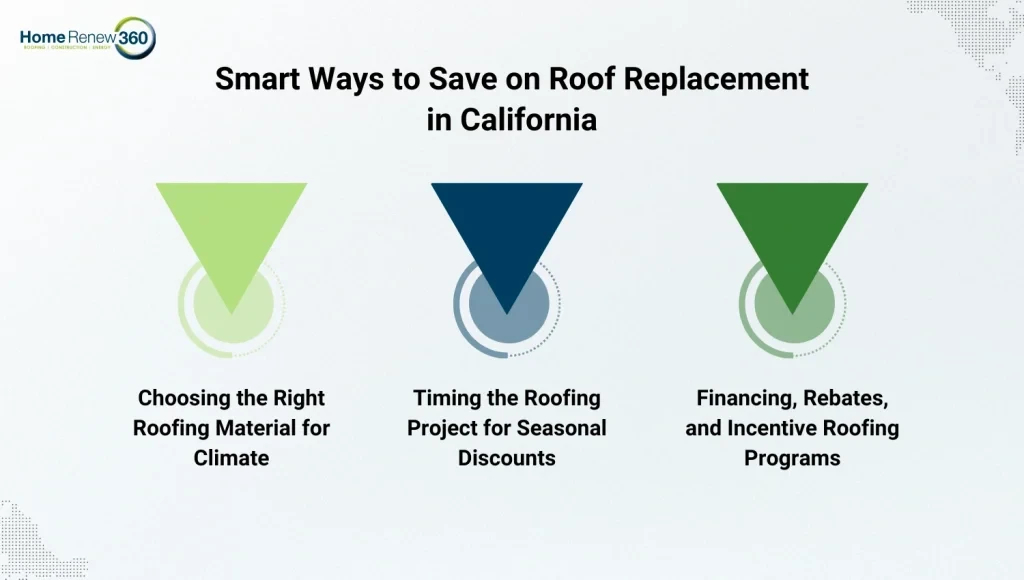
Roof replacements can be a significant investment, but smart planning and timing can help reduce costs without sacrificing quality.
Choosing the Right Roofing Material for Climate
Selecting materials suited to California’s unique climate helps minimize repairs and energy expenses. Metal roofing reflects heat efficiently, keeping homes cooler in Southern California, while tile roofs perform well in coastal and high-temperature zones.
Timing the Roofing Project for Seasonal Discounts
Roofing contractors often offer discounts during slower seasons like late fall or early winter, when demand is lower. Scheduling your project during these periods can save thousands in labor and material costs while ensuring better contractor availability.
Financing, Rebates, and Incentive Roofing Programs
California homeowners may qualify for state and federal incentive programs that support energy-efficient home upgrades. Pairing your roof replacement with solar panel installation or energy-efficient upgrades can unlock valuable rebates. Learn more about available savings through our Energy Solutions services.
When Roof Replacement Is Better Than Repair
Many homeowners initially choose small roof repairs to save money but sometimes, replacement is the smarter financial choice. Knowing when to replace rather than repair can prevent recurring issues and rising costs over time.
Warning Signs It’s Time for Roof Replacement
Here are key indicators that your roof may need a full replacement rather than patchwork repairs:
- Frequent leaks after every rainfall
- Visible sagging or soft spots on the roof deck
- Curling or missing shingles across large sections
- Water stains on ceilings or attic areas
- Mold or rot around flashing or underlayment
If you’re noticing more than one of these issues, a full roof replacement can save you from repeated maintenance expenses in the long run.
Comparing Cost: Repair vs Full Roof Replacement
| Roof Type | Average Repair Cost (2026) | Average Replacement Cost (2026) | When to Replace |
|---|---|---|---|
| Asphalt Shingles | $400 – $1,000 | $8,000 – $12,000 | If 25–30% of shingles are damaged |
| Tile / Clay | $800 – $2,500 | $15,000 – $25,000 | If tiles are cracked or underlayment is aged |
| Metal Roofing | $600 – $1,800 | $14,000 – $20,000 | If panels are rusted or seams failing |
While repairs are ideal for isolated damage, full replacement is better if your roof is over 20 years old or showing major wear. According to the National Roofing Contractors Association, replacing an aging roof increases home value and energy efficiency significantly.
Final Thoughts
As roofing material costs and labor rates continue to shift in 2026, homeowners in California can expect to pay between $9,000 and $18,000 for a full roof replacement. While this may seem like a large investment, the long-term benefits such as lower energy bills, increased home value, and improved protection, make it worthwhile. Whether you’re upgrading to a more durable material or improving energy efficiency, our experts at Home Renew 360 are here to help you make the best decision for your home.
👉 Request a free quote today through our Contact Us page.