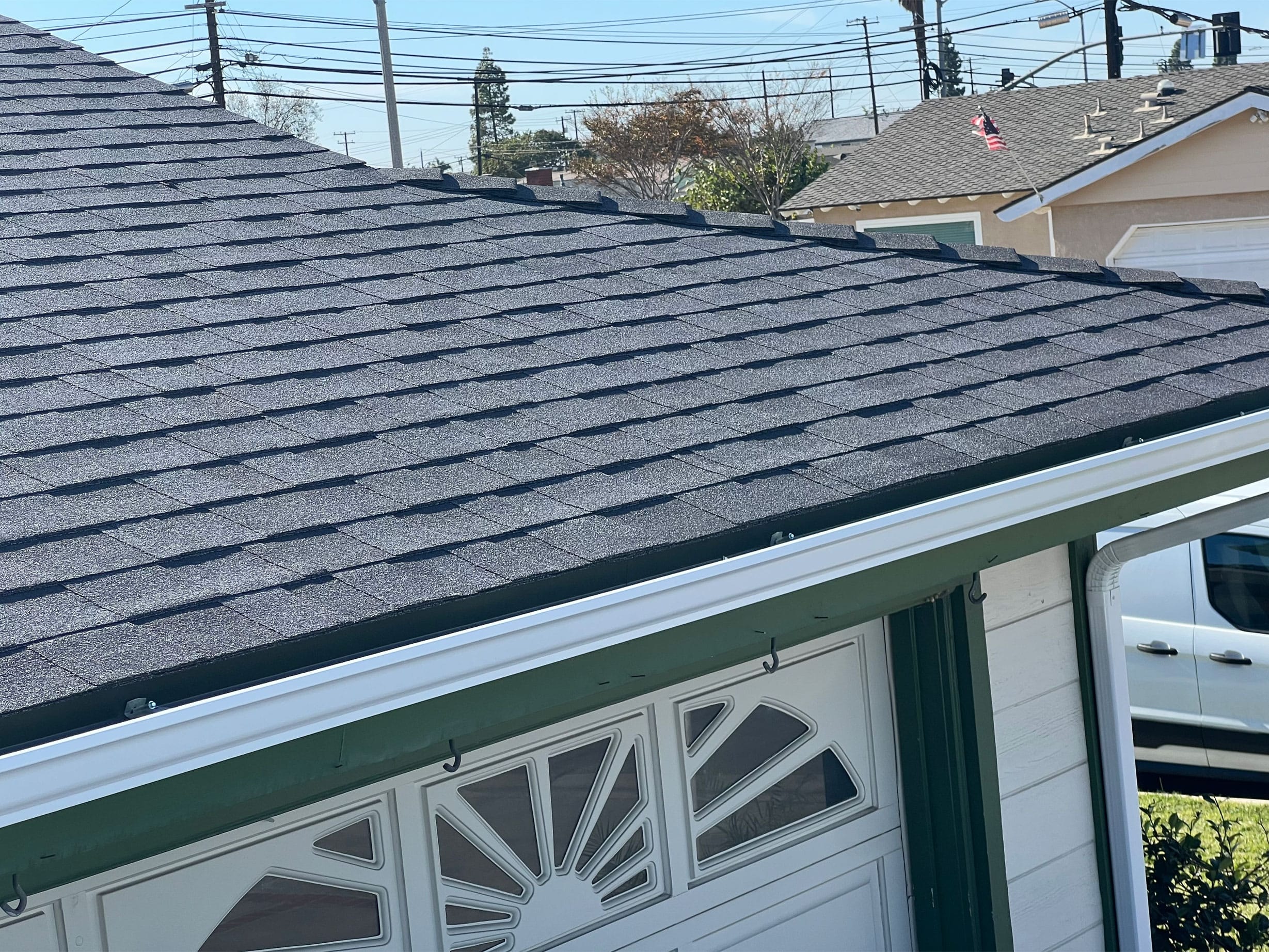
Rain gutter maintenance may feel simple, but clogged or damaged gutters can cause serious roof and foundation problems. Many California homeowners discover leaks, staining, or pooling water only after costly repairs begin. In this guide, you will learn practical rain gutter maintenance tips to prevent damage before it happens. These steps help protect your home, save money, and keep your property in strong condition year round.
Why Rain Gutter Maintenance Matters
Rain gutters do much more than collect water. They play a major role in protecting your entire home. When gutters work correctly, rainwater moves safely away from your roof, siding, and foundation. When they fail, water goes exactly where it should not, and problems begin quickly.
How gutters protect your roof, walls, and foundation
Gutters catch rainwater as it runs off the roof and direct it away from the structure. This simple system prevents water from soaking into shingles, exterior walls, and soil around the home. By guiding water safely away, gutters help reduce leaks, rot, erosion, and foundation stress.
What happens when gutters clog or overflow
Clogged gutters cannot drain water properly. Instead, water backs up and spills over the edges. When this happens, several problems may appear, including roof leaks, stained siding, flooded landscaping, and soft soil around the foundation. Over time, clogged gutters can even cause structural damage.
How Often Should Homeowners Clean Gutters
Regular gutter cleaning is one of the easiest ways to prevent expensive water damage. Cleaning schedules depend on your climate, tree coverage, and weather patterns. Staying ahead of buildup keeps gutters working the way they should and reduces the risk of unexpected repairs.
Cleaning schedules for different climates and seasons
Most homes benefit from cleaning gutters two to three times each year. Homes near trees or heavy foliage may need cleaning more often, especially during fall. After large storms, it is smart to check for debris. Regular cleaning helps water flow freely during rainy seasons.
Signs your gutters need attention sooner than usual
Sometimes gutters need cleaning earlier than planned. Watch for clear warning signs such as sagging sections, visible debris sticking out, water spilling over during rain, or birds and pests nesting inside. These signs usually mean the gutters are already blocked and should be cleaned soon.
If you are unsure whether your gutters need cleaning, repair, or replacement, schedule a quick inspection with our team. A simple check can prevent costly water damage later on.
Step By Step Gutter Cleaning Basics
Cleaning gutters may seem simple, but doing it correctly prevents damage and keeps you safe. The goal is to remove buildup carefully and make sure water can move through the system without obstruction.
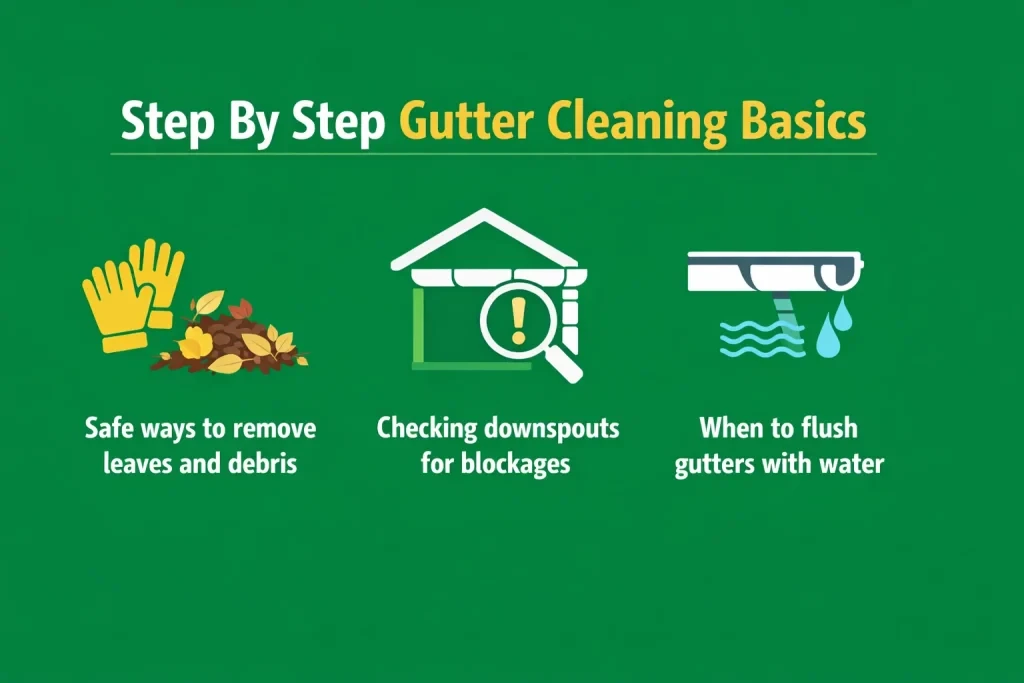
Safe ways to remove leaves and debris
Safety should always come first when working on gutters. Use a sturdy ladder and avoid leaning too far to either side. Start by scooping out leaves, twigs, and mud with gloves or a gutter scoop.
Helpful safety reminders:
- Use a ladder stabilizer when possible
- Never climb onto wet or slippery roofs
- Wear gloves and eye protection
- Work slowly instead of rushing
Staying cautious helps prevent falls and injuries.
Checking downspouts for blockages
Even if gutters look clear, downspouts can still be clogged. Blocked downspouts stop water from flowing out, which causes backups. Tap gently along the pipe. If it sounds solid, there may be debris inside. You can also test by pouring a small amount of water into the gutter. If it drains slowly, the downspout needs clearing.
When to flush gutters with water
Flushing with a garden hose is the final cleaning step. This removes leftover dirt and helps confirm water is flowing correctly. Start from the opposite end of the downspout so water moves toward the outlet. Flushing also helps you spot leaks, weak seams, or areas where water isn’t draining correctly.
Common Gutter Problems Homeowners Overlook
Some gutter problems develop slowly and are easy to miss. Catching them early prevents expensive roof, wall, and foundation damage.
Sagging or pulling gutters
When gutters sag, they can no longer channel water properly. Sagging usually happens because the brackets become loose or the gutters are weighed down by debris and water. If ignored, sections may eventually detach from the roof.
Cracks, rust, and small leaks
Small cracks or rust spots allow water to escape instead of flowing through the system. Over time, leaks can damage siding and cause stains. Even tiny holes can become major issues if they are never sealed or repaired.
Water pooling near the foundation
If you notice puddles forming around the base of your home, gutters may not be draining correctly. Poor drainage can weaken soil, affect concrete, and eventually lead to foundation problems.
Here’s a quick reference:
| Problem | What It Means | Why It’s Risky |
|---|---|---|
| Pooling water | Poor drainage | Foundation damage |
| Overflowing gutters | Blockage | Roof leaks and rot |
| Stains on walls | Leaks or overflow | Siding damage |
| Soil erosion | Water dropping straight down | Structural risk |
Pests, nests, and plant growth in gutters
Birds, insects, and even small animals love clogged gutters. Seeds trapped inside can sprout and grow. Over time, pests and plants increase blockage and add unnecessary weight. Regular cleaning prevents these problems before they become serious.
Preventive Tips to Keep Gutters Working Longer
Preventive maintenance reduces how often you need major gutter repairs. Simple actions taken now help protect your roof and foundation later.
Installing gutter guards or screens
Gutter guards help keep leaves and debris out of the system. While they do not eliminate cleaning entirely, they make maintenance easier and less frequent. They are especially helpful if trees surround your home.
Trimming trees near the roofline
Branches that hang over a roof drop leaves and twigs directly into gutters. Trimming trees reduces debris buildup and keeps pests away from the roof. This also prevents branches from scraping shingles during windy weather.
Making sure gutters have proper slope
Gutters must tilt slightly toward the downspout. If they are perfectly level or tilted backward, water will sit instead of draining. A professional can adjust the slope so water flows correctly and does not pool inside the gutter.
Thinking about protecting your home before the next rainy season? Contact Home Renew 360 to discuss the best gutter maintenance and repair options for your home.
When Gutters Need Repair Instead of Cleaning
Sometimes gutters are not just dirty. They are damaged. In these cases, cleaning alone will not solve the problem. Repairing issues early helps prevent roof leaks, siding damage, and foundation problems later.
Warning signs repairs are necessary
You may need gutter repairs if you notice any of the following:
- Sections pulling away from the roof
- Water dripping from seams or joints
- Peeling paint or stains beneath gutters
- Downspouts that constantly clog
These signs usually mean the gutter system is no longer draining water correctly.
Risks of delaying gutter repairs
Waiting too long can turn a small problem into major home damage. Water may enter the attic, walls, or crawl spaces. Wood can rot and mold may form. Repairs that might have been simple become expensive. Fixing problems early is almost always cheaper than fixing the damage water causes later.
When It May Be Time to Replace Gutters
Even the best gutter system eventually reaches the end of its life. If repairs happen constantly or the structure is failing, replacement is often the smarter choice. New gutters protect the home better and require less ongoing maintenance.
Old, damaged, or poorly installed gutter systems
Gutters may need replacement if they show several ongoing problems at once. Common situations include:
- Frequent leaks at multiple points
- Metal that is rusting or cracking
- Gutters that are too small for the home
- Systems installed incorrectly from the start
Old gutter styles may also lack modern protection features found in newer systems.
Why replacement can prevent costly future damage
Replacing failing gutters protects the areas most vulnerable to water damage, including the roof edges, siding, and foundation. A properly designed system directs rain safely away from the home and reduces long term repair risks.
New gutters offer stronger materials, better water flow, and improved durability, making them a worthwhile investment.
Conclusion
Rain gutter maintenance is one of the simplest ways to protect your home from serious water damage. With regular cleaning, early repairs, and careful inspections, your gutters continue directing water safely away from your roof and foundation. When problems are handled early, homeowners avoid larger issues and unnecessary costs. Taking care of your gutters today helps keep your home protected, safe, and ready for every rainy season ahead.