
Understanding your home remodel timeline is the key to a smooth renovation. Many homeowners start excited but soon face delays due to unexpected changes, material shortages, or permit hold-ups. In California, where design standards and building codes are strict, accurate scheduling becomes even more critical. A clear timeline not only helps you plan your living arrangements but also keeps your budget under control.
What Determines Your Home Remodel Timeline?
Every home remodeling project has its own pace. Several important factors determine how long it will take to complete your renovation, from the size of your project to your contractor’s availability. Understanding these variables allows homeowners to plan realistically and avoid frustration later.
Project Scope & Complexity
The larger the renovation, the longer the timeline. A kitchen remodel may take six to eight weeks, while a complete home renovation could stretch over several months. Adding new rooms, updating plumbing, or reconfiguring layouts all increase the complexity of work.
Projects involving structural changes, such as wall removals or foundation repairs, often require longer inspections and additional labor coordination.
Permits, Media & Materials Delays
Obtaining proper permits is often one of the most time-consuming stages of any remodel. In California, city approvals and inspections can take weeks, depending on the jurisdiction.
Material sourcing also plays a role, imported finishes, specialty tiles, or custom cabinetry may experience shipping delays. To minimize downtime, it’s smart to finalize your design and materials early in the planning phase.
Contractor Scheduling & Sub-Trade Coordination
A well-organized contractor ensures your remodel stays on track. However, overlapping schedules between electricians, plumbers, and installers can cause unavoidable pauses.
Choosing an experienced and licensed remodeling team helps keep the workflow efficient through professional coordination and transparent communication. Regular progress meetings also help avoid misunderstandings and keep everyone aligned with your goals.
Typical Timelines for Common Home Remodel Scopes
Your home remodel timeline depends largely on the scope of work. A small cosmetic upgrade may take only a few weeks, while a full renovation can extend over several months.
Cosmetic Refresh (Paint, Flooring, Fixtures)
Cosmetic remodels focus on improving appearance rather than structure. These include interior painting, new flooring, lighting upgrades, or fixture replacements. Typically, this type of remodel takes 2 to 4 weeks, depending on home size and crew availability.
A professional team can complete each phase faster by working room-by-room, minimizing disruption. If you’re planning a quick refresh to boost curb appeal or prepare your home for sale, this is your best option.
Partial Remodel (Kitchen, Bathroom, ADU)
A partial remodel involves one or two rooms but can still take significant time because of plumbing, electrical, and layout work.
- Kitchen remodels: around 6–10 weeks
- Bathroom renovations: 4–8 weeks
- ADU (Accessory Dwelling Unit) builds: 3–6 months
The timeline depends on material availability, city permits, and any custom designs. These remodels often deliver strong ROI because they improve both comfort and home value.
Full Home Remodel / Gut-Renovation
A complete home remodel involving demolition, structural work, and system upgrades typically takes 6 to 12 months. This includes everything from initial design and permits to final inspections. Homes that require electrical rewiring, plumbing replacement, or foundation updates take longer due to city regulations and inspection schedules.
Choosing a licensed, experienced contractor ensures every phase is handled efficiently, with careful planning and professional oversight. For large projects, scheduling flexibility and clear communication are essential to stay within timeline and budget goals.
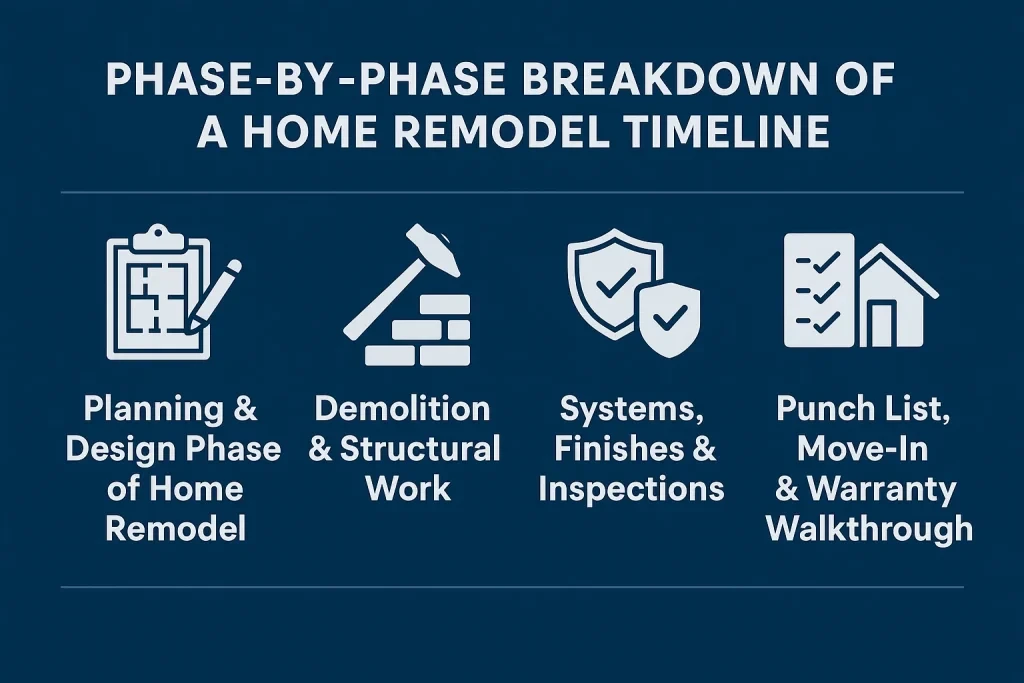
Phase-by-Phase Breakdown of a Home Remodel Timeline
Understanding each stage of your home remodel timeline helps you track progress and anticipate what comes next. Every phase from design to the final walkthrough plays a vital role in achieving a smooth, on-schedule project.
Planning & Design Phase of Home Remodel
This is where your vision takes shape. The planning and design phase typically lasts 2 to 6 weeks, depending on project scope. During this stage, homeowners work with designers and contractors to finalize floor plans, select finishes, and confirm budgets.
Permit applications are also filed during this phase, which can extend the timeline depending on your local jurisdiction. In California, cities like Los Angeles or San Diego may require additional documentation for energy compliance or zoning adjustments.
Demolition & Structural Work
Once plans are approved, demolition begins. This phase typically lasts 1 to 3 weeks, depending on the size of the remodel. Old walls, flooring, and fixtures are removed to prepare for reconstruction.
If your remodel involves foundation reinforcement, framing, or load-bearing wall changes, additional time is needed for inspections. Proper waste disposal and site safety are key priorities during this stage, ensuring a clean, efficient work environment that meets California building standards.
Systems, Finishes & Inspections
This stage includes installing plumbing, electrical, HVAC, insulation, and drywall, the core systems that make your home functional. It generally takes 4 to 8 weeks, depending on the complexity of work.
Once systems are installed, finishes like flooring, cabinets, and lighting follow. City inspectors review the work at each milestone to ensure safety and compliance. Timely inspections help prevent project delays, so choosing a contractor familiar with California’s inspection process is essential.
Punch List, Move-In & Warranty Walkthrough
After all major work is complete, the contractor and homeowner perform a punch list walkthrough to identify any remaining touch-ups or adjustments. This phase usually takes 1 to 2 weeks.
Once issues are resolved, you’ll receive warranty details for materials and labour, ensuring long-term peace of mind. At Home Renew 360, we provide post-completion support and follow-up visits to make sure your remodel remains flawless even after move-in.
How to Keep Your Remodel On Schedule (and Budget)
Keeping your home remodel on schedule requires smart planning and consistent communication. Delays often come from unclear decisions, material shortages, or scheduling conflicts.
Locking Decisions Early & Avoiding Scope Creep
One of the best ways to stay on track is to finalize all major design decisions early in the planning phase. Late changes to layouts, finishes, or structural elements often trigger costly delays and rework.
Scope creep adding more work mid-project can quickly extend your home remodel timeline and increase costs. Before construction starts, confirm your selections for materials, fixtures, and finishes with your contractor.
Managing Material Lead Times & Trade Gaps
Material lead times can make or break your remodeling schedule. Custom cabinetry, imported tiles, or specialty fixtures may take weeks to arrive. Tracking these timelines closely helps prevent unnecessary downtime.
To stay efficient, order long-lead materials early and coordinate deliveries with your contractor’s project calendar. Trade sequencing such as scheduling electricians, plumbers, and painters should also be aligned to avoid overlap or idle time.
Moving Out vs Living In During Remodel
Deciding whether to stay in your home during a remodel can directly affect both the project speed and your comfort. Living in the space can slow progress as crews must adjust work hours, noise levels, and dust control.
For large-scale or full home renovations, moving out temporarily often leads to faster completion and better quality control. However, smaller remodels like a bathroom or kitchen upgrade may be manageable while living on-site.
Conclusion
A complete home remodel timeline depends on scope, design choices, and coordination but with the right team, the process can be efficient and stress-free. From planning and permitting to the final walkthrough, every phase benefits from clear communication, early decision-making, and professional project management.
Ready to start planning your remodel? Schedule a free consultation today to discuss your vision and get a personalized project timeline.