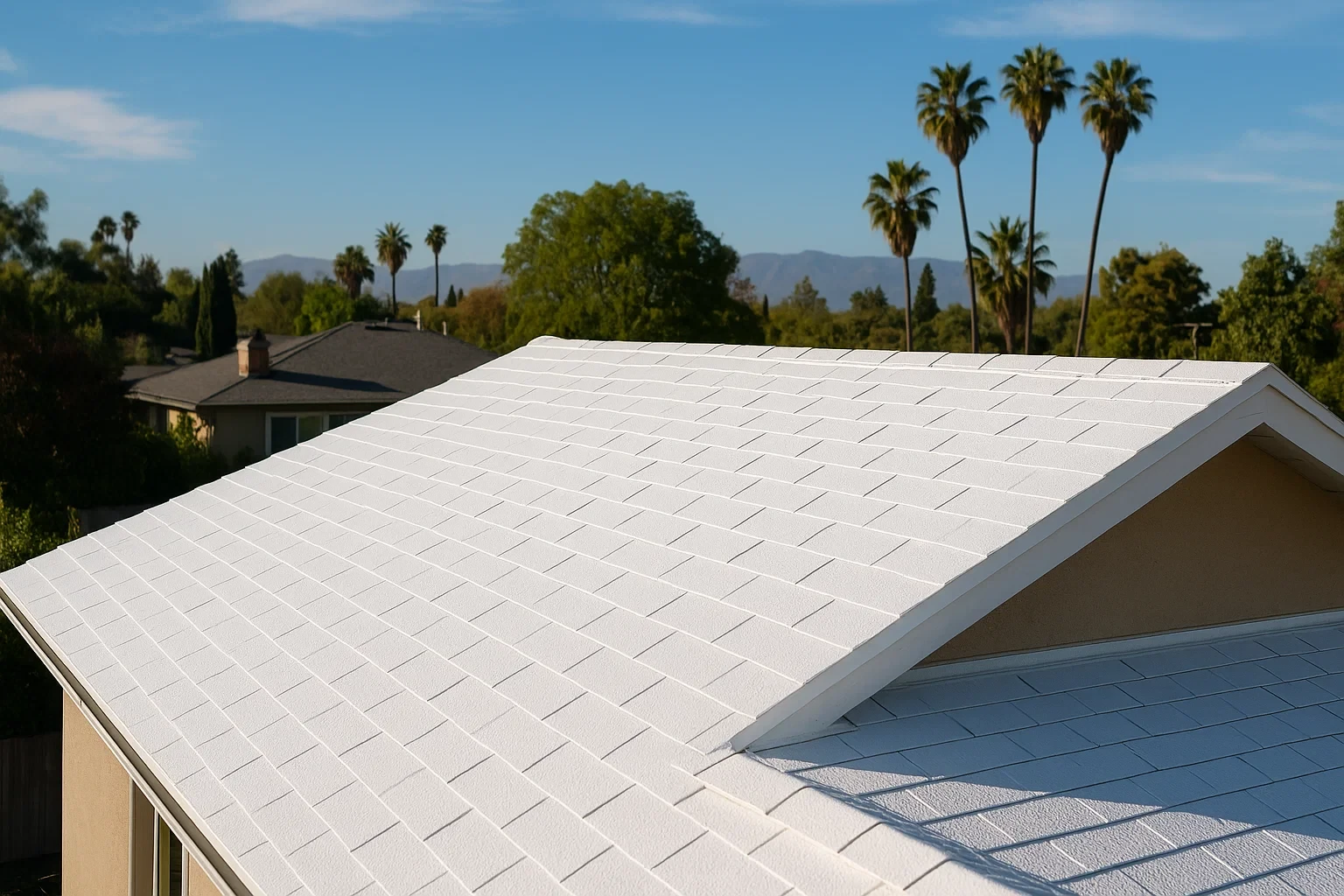
If you live in California, you already know how intense the sun can be especially in regions like Los Angeles, Orange County, Riverside, and the Inland Empire. Those long hours of direct sunlight can quickly raise indoor temperatures, forcing your air conditioner to work harder and driving up energy bills. That’s where a cool roof comes in. By reflecting more sunlight and absorbing less heat, cool roofs help reduce indoor temperatures, cut energy consumption, and qualify for several California cool roof rebate programs that make upgrading more affordable.
What Is a Cool Roof and Why It Matters in California
A cool roof is specifically engineered to reflect more sunlight and release stored heat more efficiently than standard roofing materials. This performance difference becomes especially important in California, where high temperatures and long summer heat waves can significantly increase cooling costs.
How Cool Roofs Reduce Heat & Energy Use
Traditional roofs absorb a large amount of heat during the day, transferring that heat into your attic and living spaces. A cool roof uses reflective surfaces and specialized materials to limit heat absorption, keeping your roof surface temperatures dramatically lower. The result is lower attic temperature, reduced HVAC strain, and notable energy savings throughout the year.
Benefits for Hot Climates Like Southern California
Southern California sees strong UV exposure and extended warm seasons, so homes here gain more benefits from cool roofing than many other regions. Key advantages include:
- Lower indoor temperatures without relying solely on air conditioning
- Reduced peak-hour electrical demand (important in utility “high cost” periods)
- Longer roof lifespan due to reduced thermal stress
These benefits directly align with California’s statewide push for energy-efficient buildings.
Cool Roof Ratings
Cool roofs are measured using two performance ratings:
| Property | Meaning | Why It Matters |
|---|---|---|
| Solar Reflectance | How much sunlight the roof reflects | Higher reflectance = less heat absorbed |
| Thermal Emissivity | How well the roof releases stored heat | Higher emissivity = cooler roof surface |
In California, roofing materials must meet certain cool roof standards depending on location and roof type. Homeowners can verify performance ratings through the Cool Roof Rating Council (CRRC) database, which lists approved materials.
How Cool Roof Rebates Work in California
Cool roof rebates in California are designed to encourage homeowners to reduce energy consumption, especially during peak summer months. These incentives are offered through a combination of state-level energy programs and local utility rebate programs, which help lower the upfront cost of installing qualifying cool roof materials.
State Incentives & Utility Company Programs
California has several agencies and utility providers that offer rebates for cool roof upgrades. Programs vary based on region, roof type, and the materials used. The most common rebate sources include:
- California Energy Commission (CEC) energy efficiency initiatives
- Utility company rebates, such as those from LADWP, PG&E, SDG&E, and SoCal Edison
- Local city or county sustainability programs (available in select municipalities)
The availability and rebate amount can change from year to year, so verifying current program details before planning your project is important.
Eligibility Requirements for Homeowners
Not every roofing material qualifies for rebates. To be eligible, homeowners generally must:
- Use CRRC-rated cool roof materials that meet minimum reflectance and emissivity values
- Work with a licensed contractor familiar with California building codes
- Ensure the installation complies with local cool roof requirements (especially in hot climate zones)
Some programs also apply only to existing homes, not new builds, so eligibility depends on your property and project scope.
Required Documentation and Proof of Installation
To receive a rebate, homeowners must submit documentation that confirms the correct materials and installation were used. Required items commonly include:
- Contractor’s invoice with materials listed
- Proof that materials are CRRC-qualified (Manufacturer product sheet or CRRC ID)
- Final permit or inspection documents, if applicable
- Rebate application form from your utility provider
Having your contractor provide these at the end of the project makes applying much easier. Most rebates are processed within 6–12 weeks, depending on the utility provider.
2026 California Cool Roof Rebate Programs (Updated)
Below is an up-to-date overview of major rebate and incentive programs available in California. Always verify current rates before applying, as rebate amounts can change yearly.
| Program | Rebate Amount | Applies To | Region / Utility |
|---|---|---|---|
| LADWP Cool Roof Rebate | $0.20–$0.40 per sq. ft. | Qualified Residential Roofing | Los Angeles Area |
| PG&E Cool Roof Incentives | Varies by product & rating | Energy-Efficient Roofing | Northern California |
| SoCal Edison Efficiency Rebates | Varies | Roof + HVAC Efficiency bundles | Southern California |
| Federal Solar + Roofing Tax Credit (30%) | Up to 30% of project cost | Cool Roof + Solar Integration | Statewide |
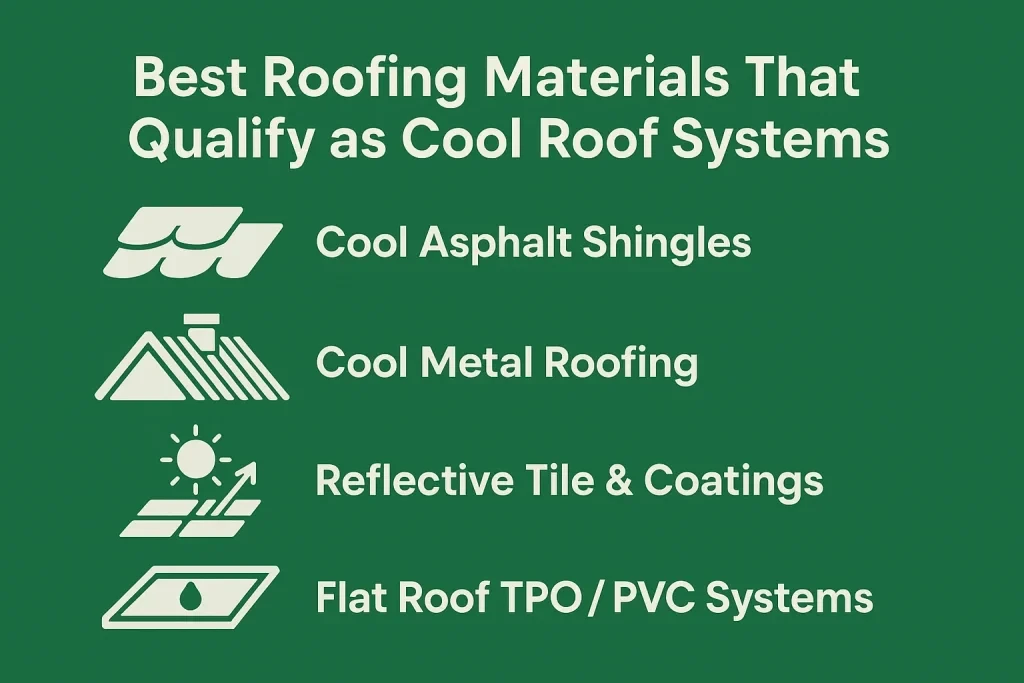
Best Roofing Materials That Qualify as Cool Roof Systems
Choosing the right material is critical to qualify for rebates and achieve long-term energy savings. Cool roof materials are specially manufactured to reflect more sunlight and absorb less heat.
Cool Asphalt Shingles
Modern cool asphalt shingles use reflective granules to bounce solar radiation away. They’re one of the most affordable cool roofing options and come in popular styles that resemble standard shingles.
Cool Metal Roofing
Metal roofs naturally reflect sunlight, and cool-rated coatings further enhance performance. They’re highly durable, fire-resistant, and excellent for homes planning long-term energy efficiency upgrades.
Reflective Tile & Coatings
Clay and concrete tiles can be coated with reflective layers to improve heat resistance. This option is popular in Spanish or Mediterranean-style homes common across California.
Flat Roof TPO / PVC Systems
For flat or low-slope roofs, TPO and PVC membranes offer high reflectivity and excellent durability. They’re widely used in both residential and commercial applications.
How to Calculate Your Potential Savings
Cool roofs lower roof surface temperature, which reduces indoor cooling demand. Over time, this results in noticeable utility bill savings.
Estimated Energy Bill Reduction
A properly installed cool roof can reduce cooling costs by 10–25%, depending on:
- Roof color and reflectivity rating
- Amount of direct sunlight exposure
- Existing attic insulation and ventilation
Roof Lifespan & Maintenance Value
Lower roof temperatures reduce thermal expansion and UV damage, helping your roof last longer and require fewer repairs over its lifespan.
Combining Cool Roof + Solar = Maximum ROI
Installing a cool roof before solar ensures:
- Panels operate more efficiently on a cooler surface
- The roof won’t need replacement during the solar system’s lifespan
- You may qualify for the 30% Federal Solar + Roofing Tax Credit
This combination delivers the strongest return on investment.
Who Should Consider a Cool Roof in California?
Cool roofs are not just for new builds. Many homeowners can benefit depending on climate and renovation timing.
Homes in High Heat Index Zones
If your home is located in inland or desert regions such as Riverside, Palm Springs, or the Central Valley, a cool roof can significantly cut cooling costs.
Homes Planning Roof Replacement Soon
If your roof is aging or already scheduled for replacement, upgrading to a cool-rated system can unlock rebates and long-term savings with minimal added cost.
Homeowners Considering Solar Integration
If you’re thinking about installing solar, installing a cool roof first maximizes solar efficiency and prevents having to remove panels for future re-roofing.
How to Get Started with a Cool Roof Installation
A smooth installation process begins with planning and contractor selection.
Roof Evaluation & Material Selection
Start with a professional attic and roof inspection. This confirms:
- Current insulation levels
- Roof slope suitability
- Best cool roofing material options for the home’s architecture
Hiring a Licensed Cool Roof Contractor
Choose a licensed contractor familiar with California cool roof standards and regional rebate programs. They’ll help ensure your roof meets required reflectivity ratings.
Filing Rebate Applications Correctly
Most rebate programs require:
- Proof of material reflectance rating
- Before-and-after photos
- Contractor documentation and invoices
Submitting accurate paperwork ensures you receive the full rebate without delays.
Conclusion
Installing a cool roof in California isn’t just about upgrading your home’s appearance. It’s a strategic move that can lower energy use, make your home more comfortable, and unlock valuable financial incentives. With statewide and utility-based rebate programs, plus the Federal 30% tax credit for qualifying roofing with solar projects, the savings can be substantial.
If your roof is aging, your home gets strong sun exposure, or you’re planning to add solar soon, now is the ideal time to explore cool roof options.