Choosing the best roofing materials for Southern California homes isn’t just about style, it’s about performance and longevity. The region’s mix of intense sunlight, coastal humidity, and wildfire-prone zones makes material selection critical. With rising temperatures and stricter energy codes, homeowners must balance aesthetics, cost, and sustainability. Understanding local conditions and regulations helps ensure your new roof remains durable, efficient, and compliant for decades to come.
Why Climate & Codes Matter for Southern California Roofs
Roofing in Southern California is unique because it must withstand diverse environmental pressures from extreme heat in inland areas to salty coastal air and seasonal wildfire risks. Homeowners who understand these challenges can make smarter material choices that extend roof life, improve comfort, and reduce energy bills.
Heat, UV, and Cool-Roof Considerations
Southern California’s long summers and powerful UV exposure can quickly degrade traditional roofing materials. Asphalt shingles, for instance, may fade or crack faster under direct sun, while darker surfaces absorb more heat and raise indoor temperatures.
Opting for cool roofing materials such as reflective metal panels or light-colored tiles — can significantly reduce heat absorption. According to the U.S. Department of Energy, cool roofs can lower surface temperatures by up to 50°F and cut cooling costs by 10–15%.
Fire Risk & Local Building Codes
Wildfires remain a major concern across many parts of California, especially in hillside and rural neighborhoods. State and local building codes now require materials with a Class A fire rating, ensuring maximum resistance to flames and embers.
Tile, metal, and synthetic slate roofs perform exceptionally well under these conditions, offering both fire safety and durability. The California Building Standards Code (Title 24) emphasizes energy performance and fire protection, meaning every roofing upgrade must meet strict environmental and safety standards.
Quick Comparison Table of Best Roofing Materials at a Glance
When comparing the best roofing materials for Southern California homes, homeowners should look beyond just appearance and cost. Durability, fire resistance, and energy performance all play major roles in how well your roof performs in the region’s demanding climate.
Here’s a quick comparison of the most popular roofing materials in 2025:
| Roofing Material | Avg. Cost per Sq. Ft. (2025 est.) | Lifespan | Fire Rating | Energy Benefits | Best For… |
|---|---|---|---|---|---|
| Asphalt Shingles | $4–$6 | 15–25 yrs | Class A (cool options) | Moderate | Budget & easy install |
| Clay / Concrete Tile | $10–$18 | 40–50 yrs | Excellent | High thermal mass | Mediterranean / Coastal homes |
| Metal Roofing | $8–$14 | 30–45 yrs | Excellent | High reflectivity (cool roofs) | Modern / eco-focused homes |
| Flat / TPO Roofing | $6–$9 | 20–30 yrs | Good | Ideal for cool coatings | Low-slope / modern homes |
| Slate / Synthetic | $12–$20+ | 50+ yrs | Excellent | Varies | Luxury / historic-style homes |
Note: Roofing materials in California must comply with Title 24 Building Energy Efficiency Standards, which regulate reflectivity, insulation, and energy-saving performance. These rules ensure roofs are built to reduce heat absorption and support sustainable living.
Asphalt Shingles Roofing Material
Asphalt shingles remain the most widely used roofing material in Southern California, offering an affordable balance of style, protection, and ease of installation. For homeowners upgrading older properties or planning quick roof replacements, asphalt shingles are a reliable entry-level choice.
Asphalt Shingles Variants
There are three main types of asphalt shingles:
- 3-Tab Shingles: Economical, flat, and simple—ideal for rental or smaller homes.
- Architectural Shingles: Thicker, dimensional layers that enhance curb appeal and weather resistance.
- Cool Shingles: Reflective coatings designed to reduce heat absorption, helping meet California’s Title 24 Cool Roof Standards.
Asphalt Shingles Cost, Lifespan, Maintenance
Expect average installation costs between $4–$6 per sq**.** ft., with a lifespan of 15–25 years. Regular inspections and roof cleaning help extend durability. Minor repairs, such as replacing missing shingles, are straightforward and cost-effective compared to other materials.
When Asphalt Is the Right Choice for SoCal Homes
Asphalt shingles are best for budget-conscious homeowners, rental properties, and homes where fast installation and moderate heat control are priorities. If you’re planning a quick and efficient upgrade, explore our Roofing Services in Los Angeles for a full range of asphalt shingle options and installation support.
Tile Roofing Material
Tile roofing, especially clay and concrete tile defines much of Southern California’s architectural character. These materials offer lasting beauty, excellent insulation, and outstanding fire resistance, making them a premium yet practical choice for coastal and Mediterranean-style homes.
Tile Energy Benefits & Fire Resistance
Tile roofs excel in thermal performance, naturally reducing indoor heat by reflecting sunlight and retaining cool air. Both clay and concrete tiles carry Class A fire ratings, making them ideal for wildfire-prone areas such as Los Angeles County.
Tile Weight & Structural Support
Clay and concrete tiles are heavy materials, often weighing 600–1,100 lbs per square. Homes with older framing may require structural reinforcement before installation. A structural assessment is recommended, our Home Remodeling Experts can help evaluate if your home is tile-ready.
Typical Tile Costs and Maintenance
Installation costs range between $10–$18 per sq. ft., with a lifespan of 40–50 years. Though durable, tiles can crack under impact; periodic inspections ensure continued performance and aesthetic longevity.
Metal Roofing Material
Modern metal roofing systems are increasingly popular among eco-conscious homeowners in Southern California. Known for strength, sustainability, and reflectivity, they’re ideal for reducing cooling costs in sunny climates.
Metal Roofing Types
- Standing Seam: Sleek panels with concealed fasteners for a seamless look and superior waterproofing.
- Corrugated Panels: Traditional ribbed metal, cost-effective for larger surfaces or ADUs.
- Coated Metal: Factory finishes like Kynar or Galvalume increase corrosion resistance and color stability.
Cool-Roof Advantages and Longevity
Metal roofs reflect up to 70% of solar energy, keeping interiors cooler and reducing A/C use. Most systems last 30–45 years, far exceeding the lifespan of asphalt shingles. Many qualify for cool roof rebates under California energy codes.
Noise, Installation Notes, and Costs
With proper underlayment, noise from rain or debris is minimal. Costs range from $8–$14 per sq. ft., depending on the finish and complexity. For modern homes or eco-renovations, view our Energy-Efficient Roofing Solutions to learn more about sustainable metal options.
Flat / TPO & Membrane Roof Materials
Flat and TPO (Thermoplastic Polyolefin) roofing systems are best suited for modern, low-slope homes or commercial-to-residential conversions across Los Angeles. Their sleek look and energy efficiency make them a smart solution for contemporary design.
Best Use Cases of Flat and TPO Roofing
TPO membranes are perfect for ADUs, mid-century modern homes, and mixed-use properties needing a watertight, reflective surface. Their flexibility and white surface coating align with Title 24’s cool roof compliance.
Maintenance & Lifespan Considerations
TPO roofs require minimal maintenance—routine cleaning and seam inspection suffice. They typically last 20–30 years and can be recoated to extend lifespan. For customized ADU or flat roof installation, explore our ADU Construction Services.
Slate & Synthetic Alternatives Materials
For homeowners seeking timeless beauty and exceptional longevity, slate and synthetic slate roofing stand out as elite choices. These materials blend elegance with extreme durability, ideal for high-end or heritage-style homes in Southern California.
Real Slate vs Synthetic Slate
- Real Slate: Naturally quarried stone with a lifespan exceeding 50 years but heavy and costly to install.
- Synthetic Slate: Lightweight composite offering a similar look at lower cost and easier handling.
Real slate costs around $12–$20+ per sq. ft., while synthetic options average $8–$12.
When to Choose for Aesthetics / Heritage Properties
Slate and synthetic roofs are best for luxury estates, historic restorations, or homes emphasizing classic architecture. Their curb appeal and longevity justify the investment. If you’re considering a high-end remodel, connect with our Roofing Experts for personalized guidance and structural planning.
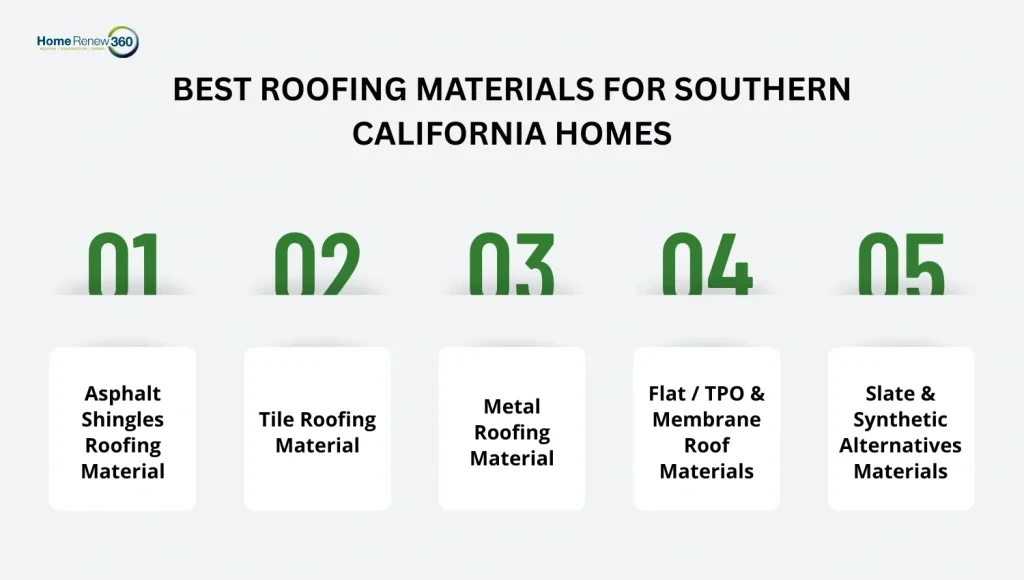
How to Choose the Right Material for Your Home
Selecting the best roofing material goes beyond looks, it’s about balancing style, structure, budget, and long-term value. Every Southern California home has its own needs based on roof slope, heat exposure, and neighborhood requirements.
Match Material to Roof Slope, Style, and Structure
The pitch and design of your roof heavily influence which materials perform best.
- Steep-sloped roofs work well with asphalt, metal, or tile systems that shed water easily.
- Low-slope roofs often benefit from TPO or membrane systems for watertight coverage.
If you’re unsure whether your roof needs a full replacement or minor updates, check out our blog on Roof Replacement Cost in California.
Match Material to Budget, Long-Term ROI, and Energy Goals
Initial price is only part of the story. Homeowners should consider total lifecycle cost, which includes maintenance, repairs, and energy efficiency.
- Asphalt shingles are low-cost upfront but need earlier replacement.
- Metal roofs cost more initially but can cut cooling bills and last twice as long.
- Tile roofs provide strong ROI with durability and fire resistance—ideal for long-term homeowners.
If energy savings and sustainability are priorities, cool roof-rated materials and reflective coatings can qualify for rebates under California’s energy efficiency programs.
Local Code & HOA Considerations
Always verify that your chosen roofing material complies with California Building Standards and your local HOA guidelines. Many communities, especially in wildfire-prone areas, require Class A fire-rated materials and cool roof compliance.
Your roofing contractor should confirm that your design, color, and material selection meet these regional safety and environmental codes before installation.
Cost vs Lifespan: Which Roof Gives the Best Value?
When comparing materials, it’s crucial to think in terms of cost per year of service, not just installation price.
Here’s a simplified example for a 1,800 sq. ft. roof:
| Material | Avg Cost Installed | Lifespan | Est. Cost per Year (30-Year View) |
|---|---|---|---|
| Asphalt Shingles | $9,000 | 20 yrs | ~$450/yr |
| Metal Roofing | $20,000 | 40 yrs | ~$500/yr |
| Tile Roofing | $25,000 | 50 yrs | ~$500/yr |
| TPO / Flat | $12,000 | 25 yrs | ~$480/yr |
Although metal and tile roofs cost more initially, their extended lifespan, lower maintenance, and energy savings often make them better long-term investments. Homeowners planning to stay for the next 20–30 years should consider value over upfront price when selecting a roof.
Conclusion
When it comes to choosing the best roofing material for your Southern California home, there’s no one-size-fits-all solution, it all depends on your priorities. If you’re looking for a budget-friendly and versatile choice, asphalt shingles are reliable and easy to maintain. For homeowners focused on energy efficiency and long-term savings, metal roofing offers exceptional heat reflectivity and durability. Meanwhile, tile roofing remains a timeless favorite for coastal or Mediterranean-style homes, combining beauty with fire resistance and longevity.
Ready to get started? Contact us today to schedule a free roof inspection or request a detailed estimate for your project.